Emergency Towing vs Flatbed: Which Do You Need?
August 24, 2026
How to Unlock Locked Car Safely Without Damage
August 28, 2026
A vehicle can go from running fine to completely stuck in seconds. One wrong turn onto a soft shoulder, a stalled engine in standing water, or a crash that leaves a wheel hanging at the curb can turn an ordinary drive into a vehicle recovery situation. The goal is not to force the vehicle free. The goal is to keep people safe, prevent more damage, and get the right equipment to the scene.
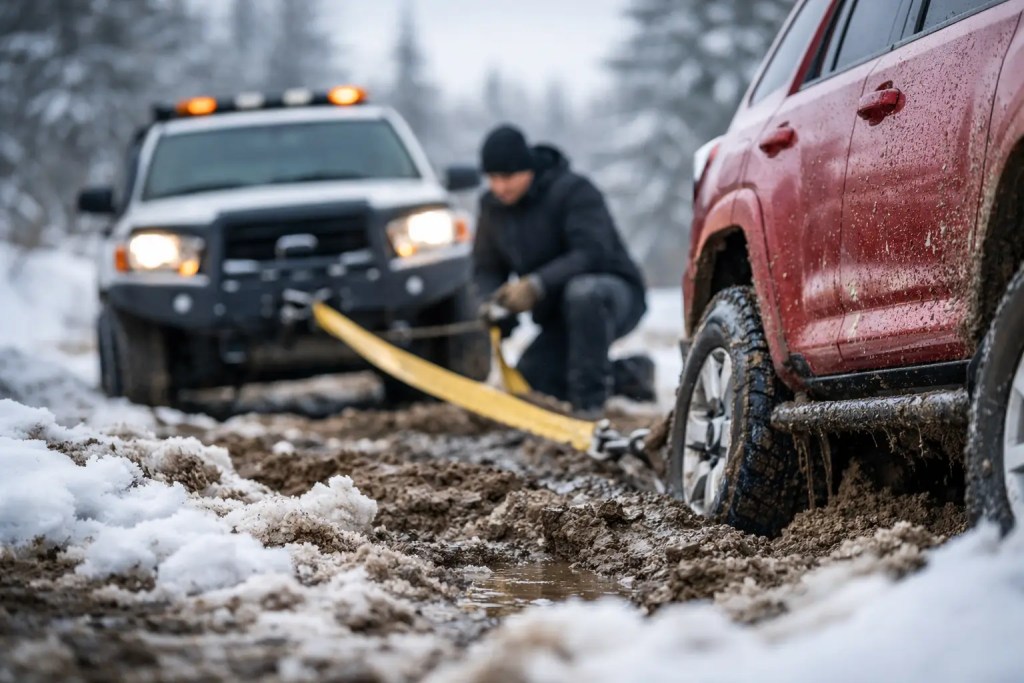
Vehicle recovery is different from a standard tow. A tow moves a vehicle that can be safely loaded or pulled from one location to another. Recovery involves stabilizing, repositioning, or extracting a vehicle that is stuck, disabled in a dangerous spot, off the road, damaged, or otherwise unable to be towed normally. That difference matters, especially on busy Tampa Bay roads, soft Florida ground, and low-lying areas after heavy rain.
When Vehicle Recovery Is the Right Call
If your car is simply parked in a safe lot and will not start, a standard tow may be all you need. If it is buried in mud, sitting in a ditch, facing the wrong direction after a collision, or disabled where traffic cannot safely pass, recovery is usually the safer answer.
Common recovery calls include vehicles that slide off wet pavement, get stuck in sand or grass, become high-centered on a curb or median, or break down on a narrow shoulder. Accidents can create recovery needs too. A damaged axle, locked wheel, bent suspension, or deployed airbags may make it unsafe to pull the vehicle with a chain or attempt to drive it away.
Floodwater is another serious concern in Florida. Do not try to restart a vehicle that has taken on water, and do not stand in moving or deep water to inspect it. Water can hide holes, debris, damaged pavement, and electrical hazards. A quick attempt to save a few minutes can turn into major engine damage or a personal safety risk.
What to Do Before Help Arrives
The first minutes after getting stuck matter. If there is any chance of a collision or you are stopped near moving traffic, focus on people before the vehicle.
If you can safely do so, turn on your hazard lights and move everyone away from traffic. On a busy road, standing beside the vehicle is often more dangerous than remaining inside with seat belts fastened. Follow directions from law enforcement or emergency responders if they are on scene.
Avoid trying to rock the vehicle back and forth by repeatedly shifting from drive to reverse. That can overheat the transmission, dig tires deeper into soft ground, or damage drivetrain components. Do not put boards, floor mats, or loose materials under spinning tires if traffic is nearby or the vehicle is unstable.
Before calling for help, have a few details ready:
- Your exact location, nearby cross streets, mile marker, or business name
- The vehicle’s make, model, and approximate condition
- Whether it is stuck in mud, water, sand, a ditch, or after an accident
- Whether wheels are damaged, locked, or off the ground
- Any hazards at the scene, including traffic, flooding, fuel leaks, or downed lines
Clear information helps the recovery operator bring the right truck, winch setup, and safety equipment. It also helps avoid delays when your vehicle is blocking a lane or sitting in a difficult position.
Why the Right Equipment Matters
Vehicle recovery is not a job for a random rope and a friend’s pickup truck. Recovery points, attachment angles, vehicle weight, ground conditions, and traffic exposure all affect how the work should be done.
Pulling from the wrong spot can tear off a bumper, damage suspension parts, bend a frame component, or make an already unsafe situation worse. Modern vehicles also have low-profile body panels, sensors, electric components, and all-wheel-drive systems that require care. A professional operator assesses the vehicle before applying force and uses proper attachment points and controlled winching when needed.
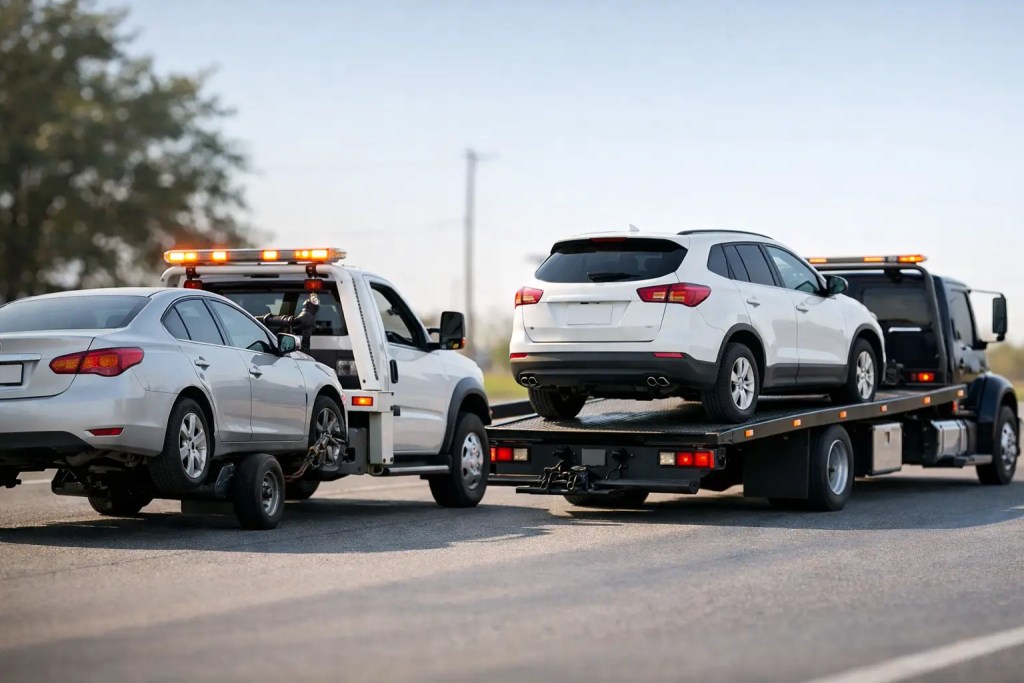
The type of truck matters as well. A wheel-lift may work for a straightforward disabled vehicle, while a flatbed is often the better choice for an accident-damaged car, an all-wheel-drive vehicle, or a car with a compromised wheel. For a vehicle stuck off-road or down an embankment, the operator may need additional rigging and a careful recovery plan before moving anything.
Fast service is important, but rushing the actual recovery is not. The safest recovery is controlled, communicated clearly, and matched to the conditions at the scene.
Vehicle Recovery After an Accident
After a collision, do not assume a vehicle is drivable because the engine still starts. Fluid leaks, damaged tires, loose body panels, steering problems, and hidden suspension damage can make driving unsafe. If the steering wheel is off-center, a wheel is rubbing, warning lights are on, or the vehicle pulls hard to one side, stop driving it.
Take photos if it is safe and practical, exchange information, and contact law enforcement when required. Then keep the vehicle where it is unless it creates an immediate danger and can be moved safely. Trying to reposition a damaged vehicle yourself can complicate the recovery and may cause further damage.
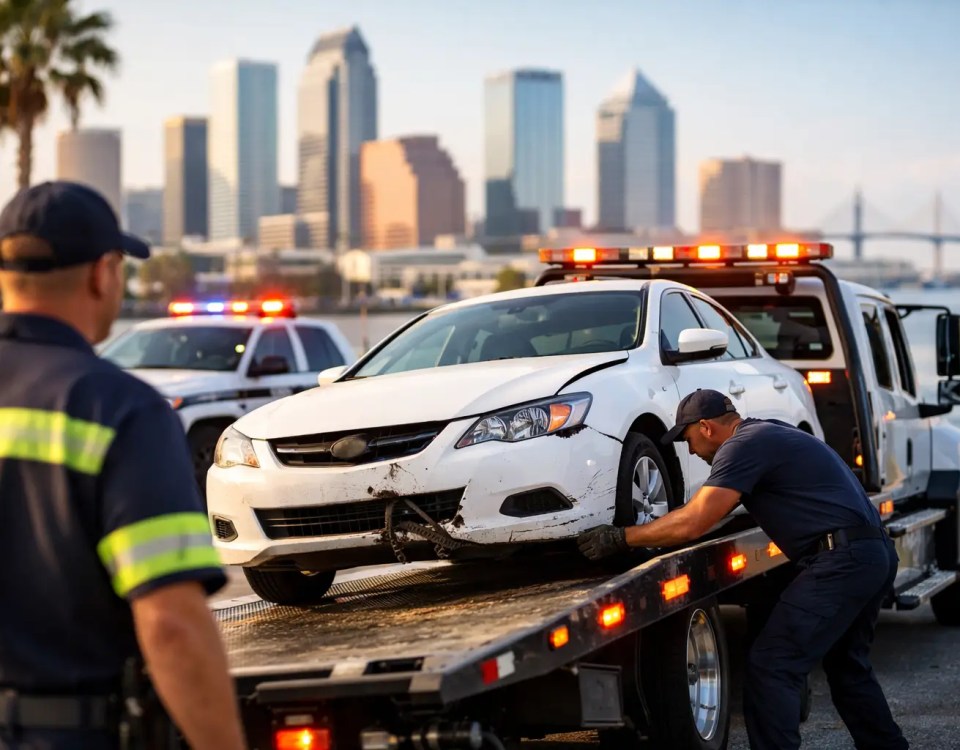
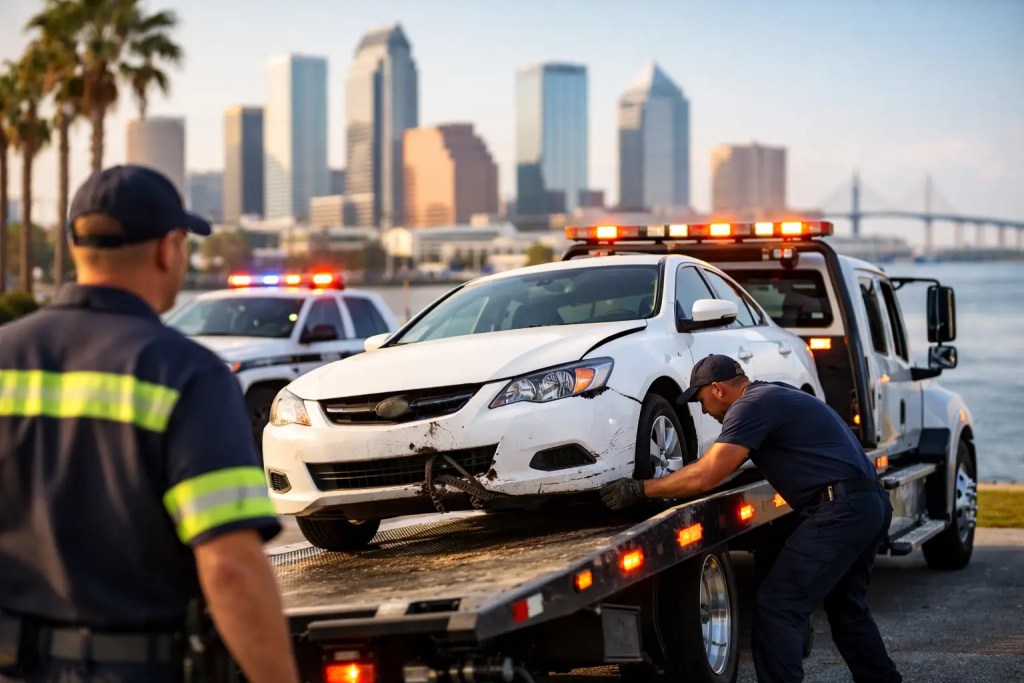
A recovery professional can secure and remove the vehicle without adding unnecessary stress to its wheels, drivetrain, or body. If you need the vehicle moved to a repair shop, home, or another safe location, say so when you call. Clear instructions help make the next step easier.
Stuck in Mud, Sand, or a Ditch? Stop Spinning the Tires
Tampa Bay drivers know how quickly a grassy shoulder can turn soft after a storm. Sand, loose soil, and saturated ground can also trap vehicles that look like they are only a few feet off pavement. The more the tires spin, the more likely the vehicle is to sink or lose traction completely.
Put the vehicle in park, set the parking brake if the ground is stable, and step back to assess the area from a safe distance. Watch for slopes, standing water, hidden drainage areas, and unstable ground. If the vehicle is leaning, sitting near a canal, or close to traffic, do not attempt a self-recovery.
Even a light vehicle can require more force than expected once it is sunk or high-centered. A controlled winch recovery can pull it free while reducing the risk of sudden movement, broken equipment, or damage to the underside.
Choosing a Recovery Service You Can Trust
When you need help, look for direct answers. You should know whether the provider can handle your situation, how quickly they can respond, and what information they need from you. A good recovery service does not make promises it cannot keep or send the wrong equipment just to get the call.
Price matters, but the cheapest option is not always the lowest-cost outcome. An improper pull can create damage that far exceeds the cost of professional recovery. Ask for clear communication about the situation, expected process, and destination if the vehicle will need to be towed afterward.
Titan Tow & Roadside LLC provides vehicle recovery, towing, and roadside help for drivers who need a fast, practical solution in the Tampa Bay area. Whether your vehicle is stuck off the road, disabled after an accident, or unsafe to drive, the priority is getting it handled safely without extra hassle.
A Smart Next Step When You Are Stranded
If you are stuck, do not gamble on a quick fix that puts you, your passengers, or your vehicle at greater risk. Get to a safe position, share accurate location details, and call for professional vehicle recovery when the situation calls for it. The right help gets your vehicle moving again – or gets it to a safe destination – without turning one bad moment into a bigger problem.
Need help with this today? We serve St. Petersburg, Tampa, Clearwater, Largo, Safety Harbor and Palm Harbor — 24/7.