How to Sell a High Mileage Car for Fair Cash
August 12, 2026
Cash Offer Factors That Set Your Car’s Price
August 16, 2026
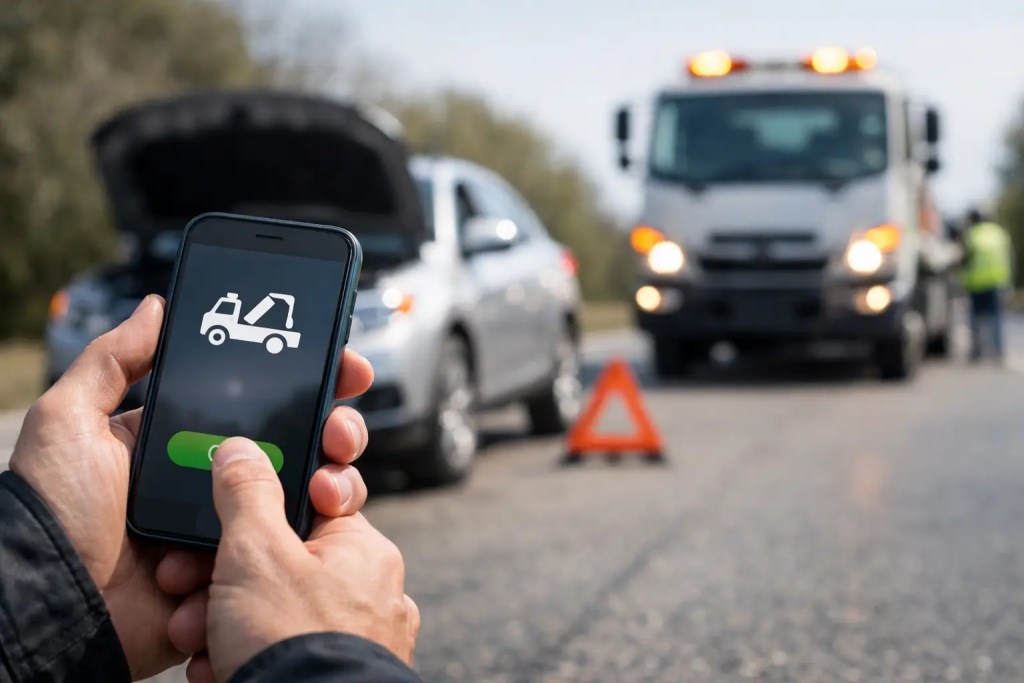
A stalled vehicle on I-275, a flat tire after dark, or a breakdown in a busy Tampa parking lot can turn stressful fast. Knowing how to request emergency towing before you make the call helps get the right truck to the right place without wasting time.
Your first job is simple: get yourself and your passengers as safe as possible. Your second is giving the towing dispatcher clear information. You do not need to diagnose the problem or know anything about tow trucks. You just need to explain where you are, what happened, and what condition the vehicle is in.
Get Safe Before You Request Emergency Towing
If your vehicle is drivable, move it out of traffic and into a safe, well-lit location if possible. A parking lot, shoulder, gas station, or side street is usually safer than sitting in a travel lane. Turn on your hazard lights immediately, even during daylight.
If you are stopped on a highway shoulder, stay aware of traffic. In many situations, the safest move is to remain inside the vehicle with seat belts fastened and doors locked, especially when traffic is moving quickly nearby. If the vehicle is smoking, leaking fuel, or in danger of being hit, get away from it and move to a protected area if you can do so safely.
Call 911 first if there are injuries, a fire, a blocked roadway, downed power lines, aggressive drivers, or any immediate danger. A towing company can remove your vehicle, but emergency responders handle hazards that put people at risk.
Have the Right Details Ready for the Call
A dispatcher can send help faster when you provide useful details right away. Before calling, take a breath and look for nearby signs, mile markers, business names, cross streets, or visible landmarks. Your phone map can help, but do not rely only on a dropped pin if you can also describe your location in plain terms.
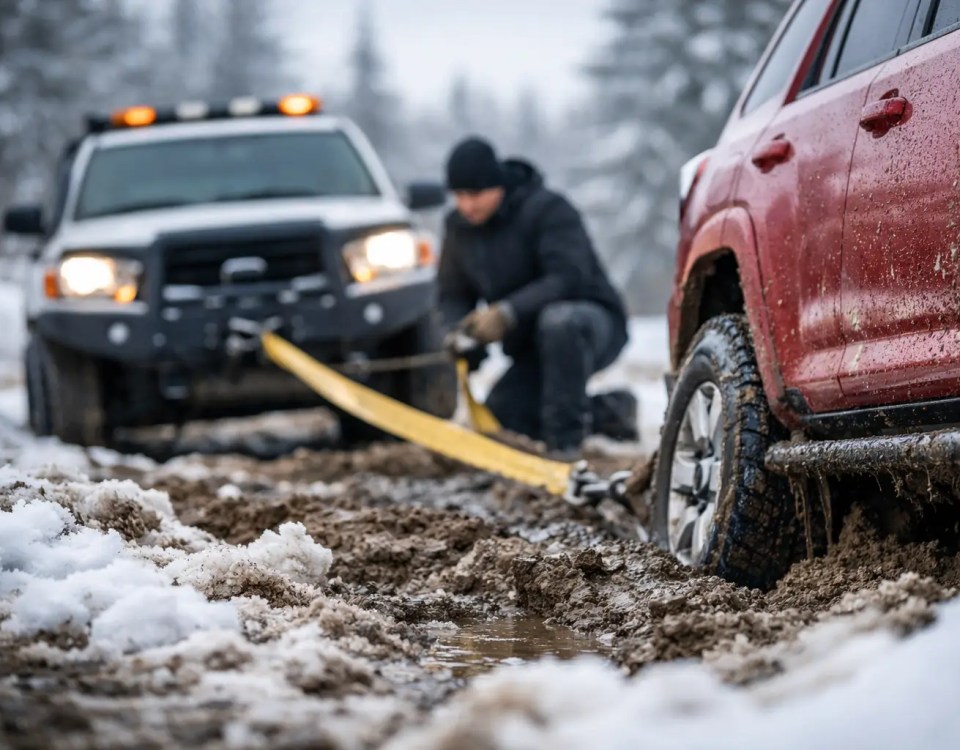
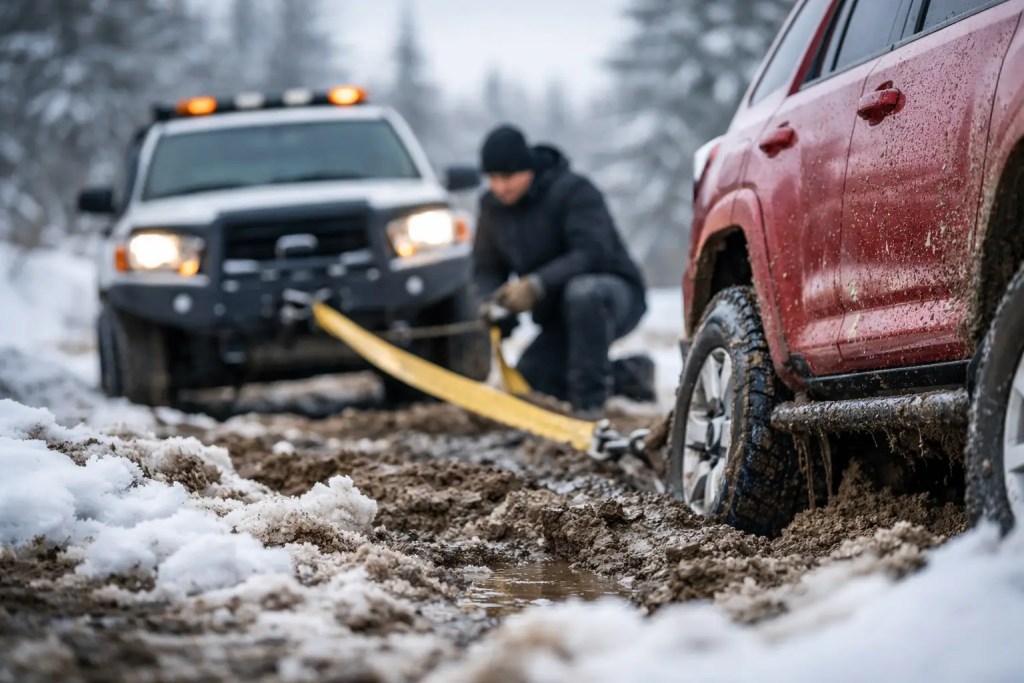
When you request emergency towing, be ready to share your exact location, your vehicle’s year, make, model, color, and the problem you are having. Also explain whether the vehicle is in a garage, parking space, ditch, median, or another difficult spot. Access matters. A truck that can handle a standard roadside tow may not be the right equipment for a vehicle stuck in mud, a parking garage, or an accident recovery situation.
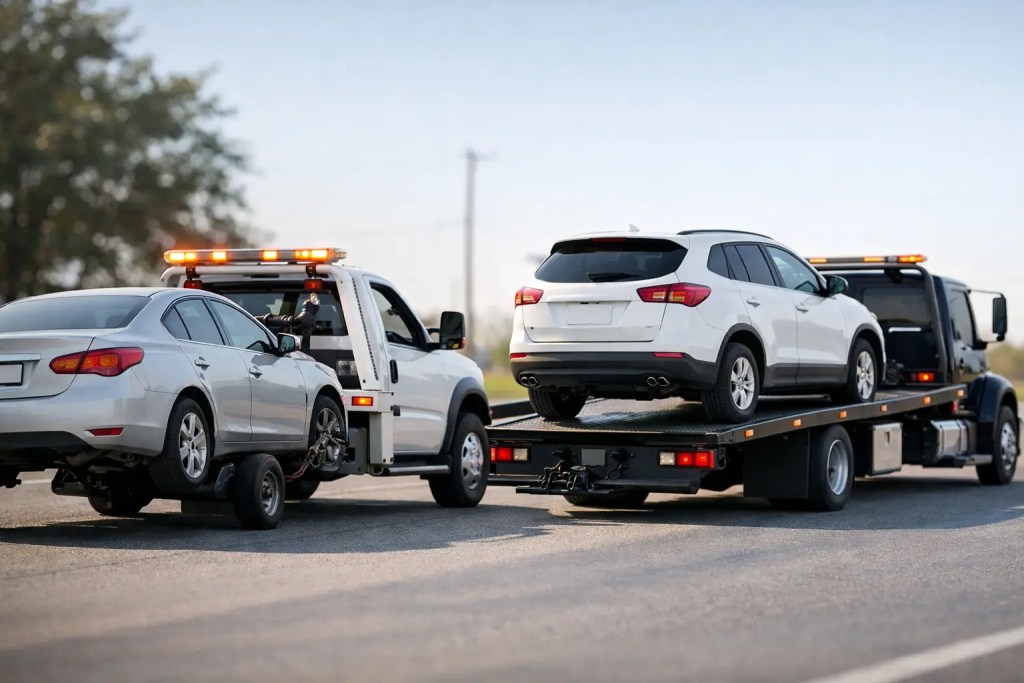
Be direct about the vehicle’s condition. Let dispatch know if it will not start, has a flat tire, has locked wheels, is missing a wheel, is damaged from a collision, or is in neutral. Mention if it is an all-wheel-drive, four-wheel-drive, electric, hybrid, lowered, or oversized vehicle. Those details help the towing provider bring the proper equipment and avoid damage during loading.
You should also state where you want the vehicle taken. That might be your home, a repair shop, a dealership, or another safe location. If you do not have a destination yet, say so. A dependable towing company can explain your options, but the driver needs clear authorization before moving your vehicle.
What to Say When You Call for Emergency Towing
Keep the conversation simple. Start with your location and whether anyone is in danger. Then identify the vehicle and describe the issue. A clear request might sound like this:
“I am on the eastbound shoulder near the next exit, in a white 2016 Honda Accord. The car will not start, and I need it towed to my home in Brandon. There are two people with me, but everyone is safe.”
That is enough to start the process. The dispatcher may ask follow-up questions about your license plate, the vehicle’s drive type, the destination, or whether you have roadside coverage. Answer as accurately as you can. Guessing about your location or vehicle condition can delay service or send the wrong truck.
Ask for an estimated arrival window and confirmation of the destination. If you are worried about cost, ask how pricing is handled before authorizing the tow. The final price can depend on mileage, vehicle size, recovery difficulty, after-hours service, tolls, and the condition of the vehicle. Straight answers upfront are better than surprises later.
Do Not Make a Dangerous Breakdown Worse
Waiting for the tow truck can feel like the longest part of the process. Use that time to stay visible and protect yourself. Keep your hazards on. If it is safe, turn on interior lights after dark. Do not stand between your vehicle and traffic, and do not try to push a disabled vehicle across active lanes.
Avoid accepting help from strangers who insist on towing your vehicle. If someone claims they were sent for you, confirm the company name, truck information, and driver identity before handing over keys or signing anything. Legitimate towing professionals should be able to verify the service request and destination.
Do not leave valuables in the vehicle. Take your wallet, keys, medication, phone charger, important documents, and anything else you need before the vehicle is loaded. If the car is going to a shop after hours, ask where it will be stored and what you need to do next.
If you have children, older passengers, or pets with you, mention that during the call. Towing trucks generally transport the vehicle, not every passenger. You may need a ride service, a family member, or another plan for getting people safely to the destination.
Know When Roadside Service May Be Enough
Not every roadside problem requires a tow. A dead battery, locked keys, an empty fuel tank, or a simple flat tire may be solved where you are. If a jump start, lockout service, tire change, or fuel delivery can safely get you moving, it may be faster and less expensive than towing.
Still, do not force the issue. A car that overheated, lost oil pressure, has severe engine noise, has a damaged tire sidewall, or was involved in a collision should not be driven just because it starts. Driving a compromised vehicle can create more expensive damage or put you back in danger a few miles down the road.
Tell the dispatcher what you see and hear. “The engine temperature is high,” “the tire blew out,” or “the steering feels loose after the accident” is more helpful than simply saying the car is broken. The towing professional can help determine whether roadside assistance is appropriate or whether the vehicle should be transported.
Prepare for the Tow Truck’s Arrival
Once help is on the way, keep your phone nearby and answer calls from the dispatcher or driver. Towing crews often need to confirm an entrance, parking-lot section, highway direction, or nearby landmark. A missed call can add unnecessary delay, especially in large apartment complexes, crowded shopping centers, or unfamiliar areas.
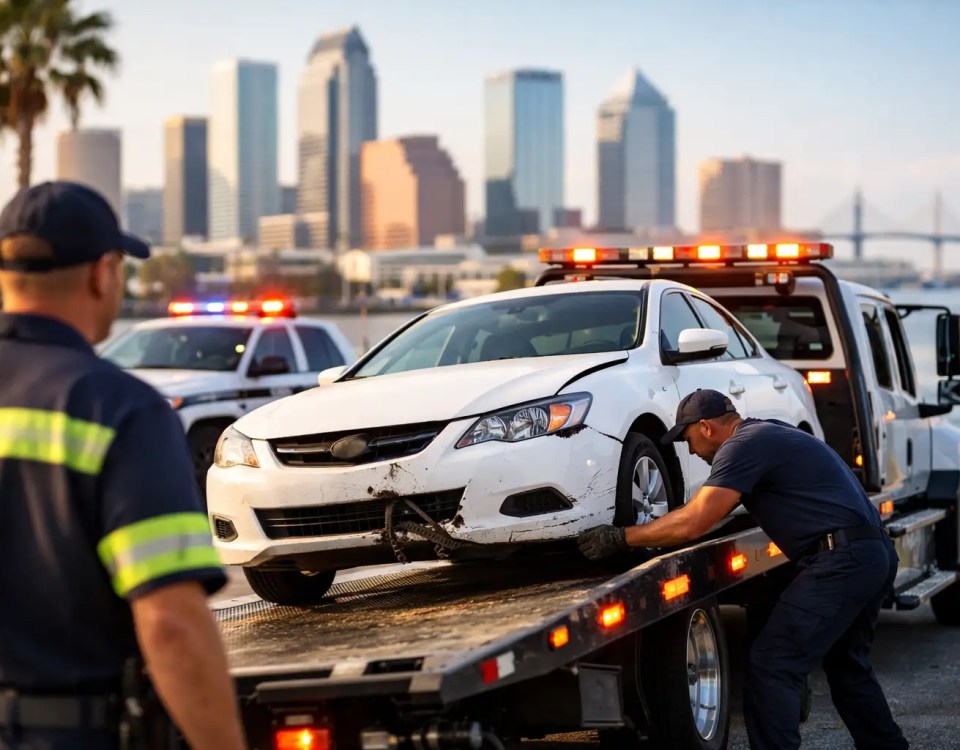
When the driver arrives, confirm your name, vehicle, and destination. Remove personal items, provide the keys, and point out any damage or special concerns before loading begins. If your vehicle has a low bumper, parking brake issue, aftermarket equipment, or cannot roll, say so clearly.
A professional operator will secure the vehicle correctly and explain what happens next. Read any authorization paperwork before signing. Keep a copy or take a photo of the service details, including the destination and any agreed-upon charges. This protects you and makes it easier to follow up with a repair shop, insurance company, or roadside plan provider.
Choose a Local Towing Team That Communicates Clearly
During an emergency, fast service matters. So does communication. Look for a towing provider that answers the phone, confirms the pickup location, gives realistic arrival expectations, and sends equipment suited to your situation. The cheapest quote is not always the best choice if the company cannot tell you when help is coming or what type of truck it will send.
For drivers across Tampa Bay, Titan Tow & Roadside LLC provides emergency towing and roadside support with a straightforward approach: explain the issue, confirm the location, and get help moving. No runaround. No guessing about what happens next.
A breakdown does not need to become a bigger problem. Get to safety, give clear details, keep your phone on, and let qualified help take it from there.
Need help with this today? We serve St. Petersburg, Tampa, Clearwater, Largo, Safety Harbor and Palm Harbor — 24/7.