Roadside Assistance When You Need It Fast
June 28, 2026
When You Need a Towing Service Fast
June 30, 2026

A stalled car in moving traffic changes your priorities fast. When your engine quits, a tire blows, or an accident leaves your vehicle unsafe to drive, emergency towing is not about convenience – it is about getting you out of danger and off the road without wasting time.
Most drivers do not think about towing until they need it right now. That is usually how it happens. You are heading to work, picking up your kids, or trying to get home before the weather gets worse, and suddenly the vehicle will not move. In that moment, the right towing service matters for one reason above all others: speed without confusion.
What emergency towing really means
Emergency towing is for situations where waiting is not a good option. That can mean your vehicle is disabled in traffic, stuck on the shoulder of a busy road, damaged after a collision, or unsafe to keep driving because of smoke, fluid leaks, steering problems, or severe tire damage.
Not every tow is an emergency. If a project car needs to be moved next week or a non-running vehicle is being picked up from a driveway, that is a scheduled tow. Emergency towing is different because the risk is immediate. The goal is to protect the driver, passengers, other vehicles on the road, and the disabled vehicle itself.
That distinction matters because response time, communication, and equipment all become more important when the vehicle is in a bad spot. A tow operator should not leave you guessing. You need clear answers, a realistic ETA, and a fast plan.
When to call for emergency towing
Some breakdowns can be handled with roadside help. Others cannot. A dead battery may only need a jump start. A lockout usually does not require a tow. But if the car cannot be driven safely, towing is the right call.
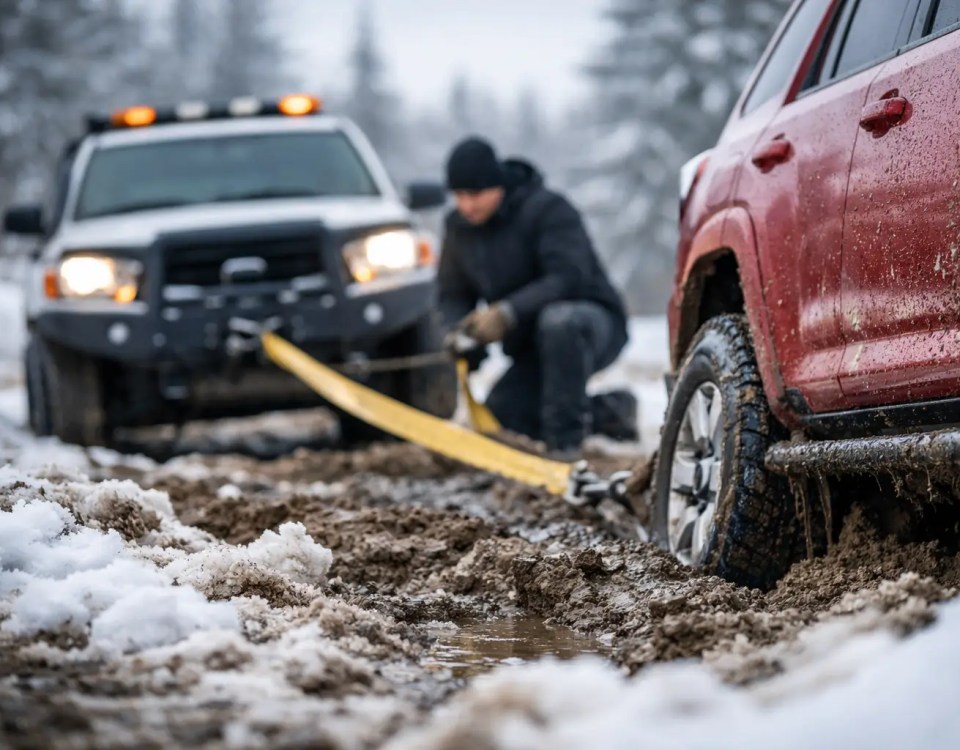
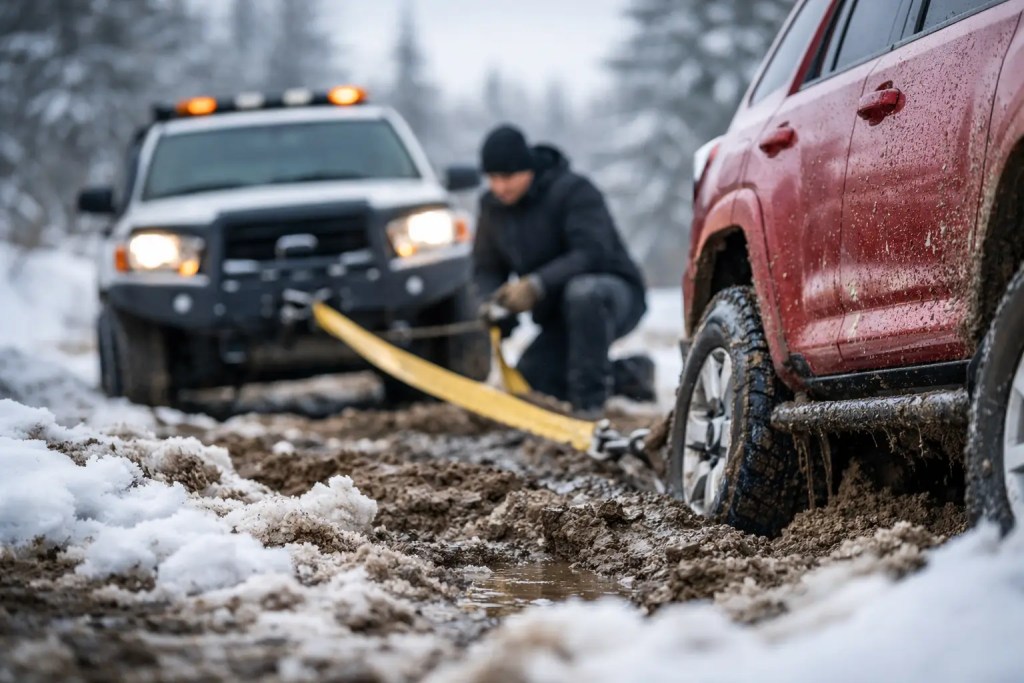
You should consider emergency towing if the vehicle will not start and is stranded somewhere unsafe, if the engine overheated and shut down, if you were in an accident, if the steering or brakes feel compromised, or if the wheel, axle, or suspension appears damaged. The same goes for vehicles stuck in mud, a ditch, or a parking barrier where trying to force them out could make the damage worse.
There is also the gray area that catches a lot of drivers off guard. Sometimes the car still moves, but it should not be driven. Maybe it is making a harsh grinding sound. Maybe transmission shifting is erratic. Maybe a warning light came on with smoke under the hood. In those cases, trying to “limp it home” can turn a manageable repair into a major one.
What to do before the tow truck arrives
The first job is safety. If you can move the vehicle out of traffic, do it. If you cannot, stay calm and assess your surroundings. Turn on your hazard lights right away. If it is safe to exit the vehicle, move yourself and any passengers to a protected area away from traffic.
If you are on a high-speed road or visibility is poor, do not stand next to the vehicle. That is especially true at night or during heavy rain, which drivers in the Tampa area know can turn a routine roadside stop into a dangerous one fast.
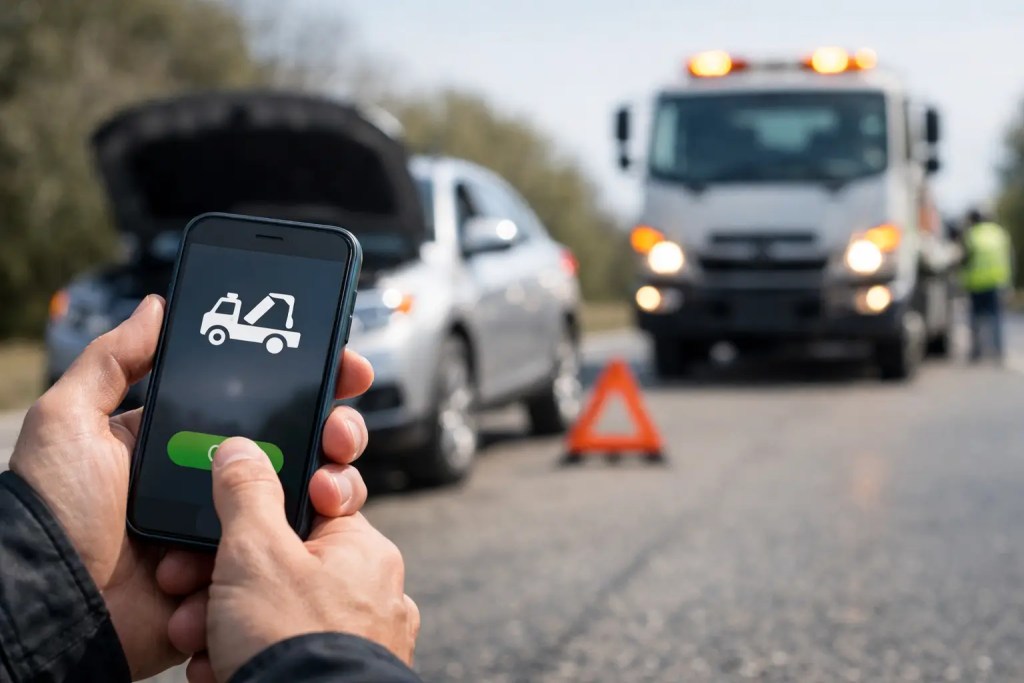
When you call, be ready with the exact location, the vehicle make and model, and a short description of the problem. If the car is stuck, say what it is stuck in. If it was in a collision, mention that too. The more accurate you are, the faster the towing company can send the right truck.
While you wait, keep your phone nearby and stay available. Good emergency towing service depends on quick coordination. If the driver calls for a location detail and cannot reach you, that can slow things down.
What a good emergency towing service should provide
At a minimum, emergency towing should be fast, clear, and professional. That sounds obvious, but not every service delivers all three when pressure is high.
Fast response matters because every extra minute on the shoulder or in a parking lot after an accident adds stress and risk. Clear communication matters because people need to know help is actually on the way. Professional handling matters because the wrong towing method can damage a vehicle even more.
The best towing experience is usually simple. You call. You explain the problem. You get a realistic ETA. The truck arrives with the right equipment. Your vehicle is loaded properly and taken where it needs to go. No runaround. No vague promises. No hassle.
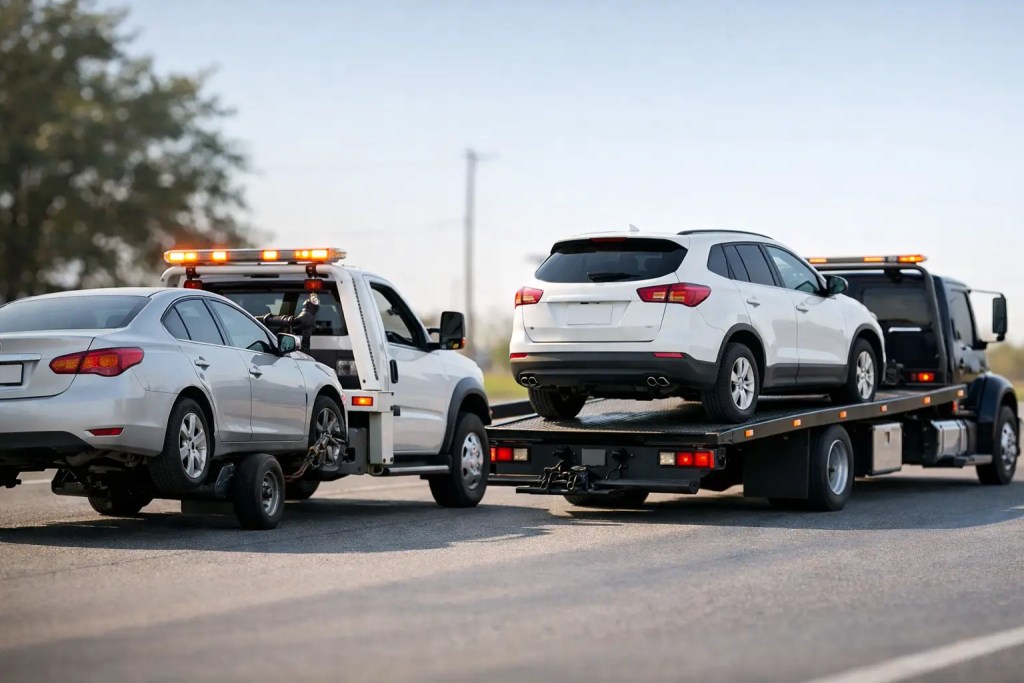
That is especially important when the vehicle is low-clearance, all-wheel drive, heavily damaged, or stuck in a difficult spot. A basic hook-and-go approach is not right for every vehicle. Depending on the situation, a flatbed or recovery setup may be the safer option.
Emergency towing vs roadside assistance
Drivers often use these terms interchangeably, but they are not the same thing. Roadside assistance covers problems that can often be fixed on the spot. That includes jump starts, lockout service, tire changes, and sometimes fuel delivery.
Emergency towing comes into play when the vehicle cannot be made drivable where it sits. The smartest service providers offer both, because the right solution depends on the actual issue, not a script.
That flexibility saves time. If a technician arrives and sees the problem is a dead battery, you may not need a tow at all. If they find collision damage or a mechanical failure that makes the car unsafe, towing becomes the next step. Either way, you want a company that can handle the problem without making you start over with someone else.
Why local response makes a difference
In an emergency, local matters. A towing company that knows the area can usually navigate traffic patterns, common bottlenecks, and difficult pickup points better than a dispatcher working from far away.
That can make a real difference if you are stuck near a busy intersection, on a crowded stretch of highway, or in a tight apartment complex where access is limited. Local teams also tend to give more practical ETAs because they know how weather, events, and rush hour affect the roads.
For drivers across Tampa Bay, that kind of familiarity is not a small detail. It often means getting help sooner and with less back-and-forth.
The cost question drivers always ask
Yes, price matters. But in an emergency, the cheapest option is not always the best one. The real value is getting the vehicle moved safely, quickly, and without surprise charges.
A fair towing company should be straightforward about what affects the cost. Distance, vehicle type, recovery difficulty, and whether special equipment is needed all play a part. A car pulled from a standard parking lot is different from an SUV recovered from a ditch after heavy rain.
The key is transparency. You should not have to fight for basic information or worry that the bill will change for no reason once the truck shows up. Fast service and honest communication should go together.
Why preparation still matters
Nobody plans to need emergency towing, but a little preparation helps when the bad day comes. Keep your registration and insurance information easy to find. Make sure your phone is charged when you travel. Know where you want the vehicle taken if it cannot be driven.
It also helps to think in advance about who you would trust to call. In a stressful moment, people make rushed decisions. If you already know a local company that handles towing, roadside help, and vehicle recovery, the next steps are a lot easier.
Titan Tow & Roadside LLC works that way – fast response, clear communication, and practical help when drivers need it most. That is what people want in an emergency. Not a sales pitch. Just someone who shows up ready to solve the problem.
Emergency towing is about getting control back
Car trouble has a way of making everything feel stuck at once. Your schedule is blown up, traffic is moving around you, and every minute feels longer than it should. Good emergency towing does more than move a vehicle. It gives you a clear next step when the situation is working against you.
If you ever find yourself stranded, focus on safety first and get help from a towing company that values speed, honesty, and doing the job right. When things go wrong on the road, the best service is the kind that makes the next move simple.
Need help with this today? We serve St. Petersburg, Tampa, Clearwater, Largo, Safety Harbor and Palm Harbor — 24/7.