Vehicle Recovery: What to Do When You’re Stuck
August 26, 2026
Accident Towing Guide: What to Do After a Crash
August 30, 2026
A car lockout can turn a normal day into a stressful mess fast. When drivers search “unlock locked car safely,” they usually need one thing: a way back into their vehicle without breaking glass, damaging a door, or creating a bigger repair bill. The right move depends on where you are, who is inside the vehicle, and what access options you have.
Start by Making the Area Safe
Before worrying about the keys, look at your surroundings. If your vehicle is stopped in traffic, on a narrow shoulder, in a parking lot after dark, or anywhere that feels unsafe, get yourself out of harm’s way first. Turn on your hazard lights if possible and stand somewhere visible, away from moving vehicles.
Do not leave children, pets, elderly passengers, or anyone with a medical concern inside a locked vehicle. Florida heat can become dangerous quickly, even when the outside temperature does not feel extreme. If someone is trapped inside, appears distressed, or the vehicle is running in an enclosed area, call 911 right away. A lockout service is the right solution for a routine problem. An emergency needs emergency responders.
If you are safely parked and no one is in immediate danger, take a breath and check the simple options before trying anything else. Many lockouts have an easy answer.
How to Unlock a Locked Car Safely
The safest approach is always the one that protects the vehicle and does not put you at risk. Start with the access methods already designed for your car.
Check Every Door and the Trunk
It sounds obvious, but stress makes people overlook obvious things. Check each door, including the passenger doors and rear doors. If your vehicle has a separate trunk release or hatch, check whether it is accessible and whether your owner’s manual provides a safe interior entry option.
Do not repeatedly pull on handles or force a door that feels stuck. You could damage a latch, weather stripping, or handle assembly. A locked vehicle should remain secure until you can gain proper access.
Look for a Spare Key or Digital Access
A spare key is the fastest solution when one is available. Think beyond home. A trusted family member, roommate, nearby friend, or workplace may have access to it. If you are close enough and the wait is reasonable, this may be the simplest path.
Many newer vehicles also offer manufacturer apps, connected-car services, or keyless entry features that can restore access remotely. This depends on your vehicle make, subscription status, phone battery, and whether the system was set up before the lockout happened. If your phone is dead or the app was never activated, do not waste time trying to create an account in a parking lot. Move to the next safe option.
Call Roadside Assistance or a Professional Lockout Service
For most drivers, professional lockout help is the best answer. A trained roadside technician has the proper tools and experience to open a vehicle with minimal risk to the door frame, glass, seals, lock mechanism, and electrical components.
This matters even more with late-model vehicles. Many newer cars have side-impact sensors, advanced wiring, electronic locks, side curtain airbags, and complex weather seals near the door frame. What looks like a simple gap around a door can hide parts that are expensive to repair.
When you call for help, be ready to provide the vehicle’s year, make, model, your location, and whether the keys are visible inside. If you are in the Tampa Bay area, Titan Tow & Roadside can provide professional lockout assistance along with clear communication about the service process and arrival expectations.
Do Not Force Your Way Inside
A lockout is frustrating. A broken window, bent door frame, damaged airbag system, or failed lock cylinder is worse. Avoid improvised entry methods, even if they seem quick on a video or a friend says they have done it before.
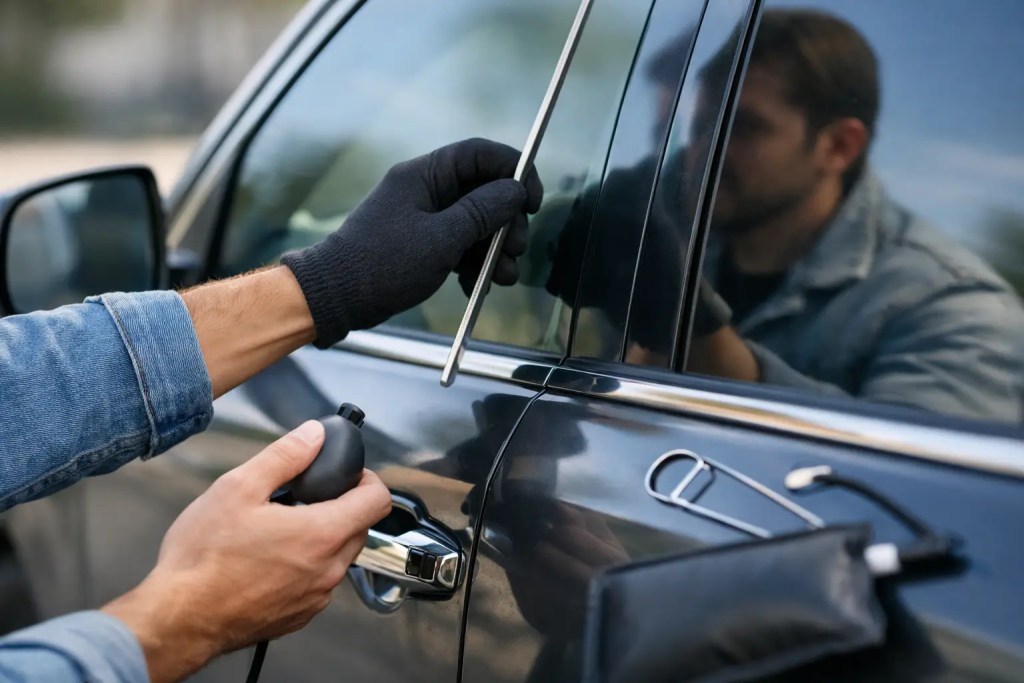
Do not pry the door open with tools, wedges, screwdrivers, or coat hangers. Do not attempt to manipulate the lock through the window opening. These methods can scratch paint, tear seals, bend the frame, damage interior trim, or interfere with electronic components. They can also make the door louder on the road, allow water leaks, or create wind noise that continues long after the lockout is over.
Breaking a window should not be a routine solution. Glass creates a safety hazard, leaves the vehicle exposed, and often costs more than a professional lockout service. The only exception is an immediate life-safety emergency where a person or animal is trapped and emergency responders direct you to take action.
Know When the Situation Needs More Than Entry Help
Sometimes the keys are not actually the main problem. If your key fob will not work, the battery in the fob may be dead. Many vehicles have a hidden mechanical key inside the fob or an emergency start procedure, but those instructions vary by manufacturer. Your owner’s manual or dealership can help explain the correct process for your specific vehicle.
If the car battery is dead, the electronic locks may not respond even with a working fob. You may need a jump start after gaining access. If the key is broken, missing, or stolen, you may need a locksmith or dealership support rather than basic lockout assistance.
There is also a security side to consider. A professional may ask for identification and proof that you own or are authorized to use the vehicle. That is normal. It protects you, your vehicle, and everyone else. Have your driver’s license, registration, insurance card, or digital documentation ready if you can access it.
What to Have Ready When You Call
A fast response starts with clear information. Give the dispatcher your exact location, including the name of a business, parking lot section, highway exit, or nearby landmark. If you are on the side of the road, mention the direction of travel and whether your vehicle is safely off the roadway.
It also helps to share the vehicle color, year, make, model, license plate if available, and whether the keys are locked in the cabin, trunk, or cargo area. Tell the service provider if a child, pet, or vulnerable passenger is inside. That information changes the urgency of the response.
Keep your phone charged if possible, stay near the vehicle in a safe place, and watch for the service vehicle. If conditions change – such as worsening weather, a safety concern, or a medical emergency – call back immediately or contact 911.
Prevent the Next Lockout
Once you are back inside, take two minutes to reduce the odds of another lockout. Replace a weak key fob battery, keep a spare key in a secure location, and make sure any vehicle app or roadside membership is active before you need it. If your car locks itself unexpectedly, have the locking system inspected instead of assuming it was a one-time issue.
A lockout does not need to become a damaged door, broken glass, or long roadside delay. Stay safe, protect your vehicle, and call for professional help when the simple options do not work. Fast, careful assistance is usually the least expensive way to get moving again.
Need help with this today? We serve St. Petersburg, Tampa, Clearwater, Largo, Safety Harbor and Palm Harbor — 24/7.