What Affects Junk Car Value? 9 Things That Matter
August 18, 2026
Car Selling Checklist: Get Cash Without Delays
August 22, 2026
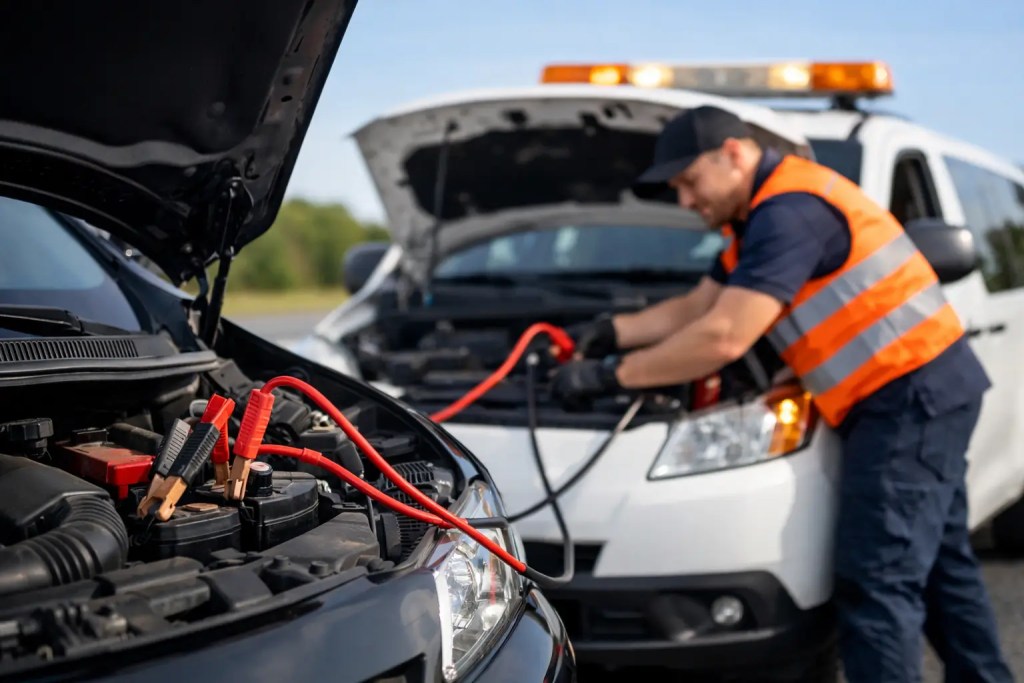
Your car was fine when you parked it. Now the dash lights flicker, the engine will not crank, and you are stuck in a driveway, parking lot, or on the side of the road. A jump start service gets power back to a dead battery so you can get moving without guessing, waiting on a friend, or risking damage with a bad connection.
A dead battery is one of the most common reasons Tampa Bay drivers need roadside help. Heat, short trips, old batteries, loose connections, and accessories left on can all drain the charge. The good news is that many no-start situations are solved quickly. The catch is that a jump start is not a permanent repair, and it is not the right answer for every vehicle that will not start.
When a Jump Start Service Is the Right Call
Most battery-related no-starts have a few familiar signs. You turn the key or press the start button and hear rapid clicking. The engine cranks slowly, or it does not crank at all. Interior lights are dim, the dashboard acts strangely, or the power locks barely respond.
If those symptoms showed up after the vehicle sat overnight, after you left a light on, or after several short drives, a jump start may be all you need to get going. A professional roadside technician can connect the equipment correctly, confirm the vehicle has enough power to start, and get you back on the road fast.
Calling for help also makes sense when you do not have jumper cables, do not feel safe asking another driver for a jump, or are parked where getting another vehicle close is difficult. In a busy lot, on a narrow street, or alongside traffic, speed matters, but safety matters first.
What Happens During a Professional Jump Start
A proper jump start service is straightforward. The technician checks for obvious issues, makes sure the vehicle is in park or neutral with the parking brake set, and connects the jump pack or cables in the correct order. Once the engine starts, they remove the connections safely and make sure you have the information you need for the next step.
That process is quick, but it should not be careless. Modern vehicles have sensitive electronics. Connecting cables backward, using damaged cables, or jumping a battery that is leaking, swollen, or cracked can create a bigger problem than the one you started with.
A roadside professional is especially useful for vehicles with hard-to-reach batteries, hybrid systems, or batteries located in the trunk. Some vehicles have designated jump terminals under the hood rather than direct battery access. Following the manufacturer’s setup protects the vehicle and avoids unnecessary risk.
A Jump Start Will Not Fix Every No-Start Problem
A jump supplies temporary power. It does not repair the reason the battery went dead. If your vehicle starts and stays running normally, you may be able to drive to a battery shop, repair facility, or home. If it dies again soon after the jump, there is likely another issue that needs attention.
The problem could be an old battery that no longer holds a charge. Most car batteries last roughly three to five years, but Florida heat can shorten that window. High temperatures speed up battery wear, which is why a battery that seemed fine last month can fail with little warning.
A failing alternator is another possibility. The alternator recharges the battery while the engine runs. If it is not doing its job, the vehicle may start with a jump and then stall as stored battery power runs out. Warning signs can include a battery light on the dashboard, headlights that dim or brighten unexpectedly, burning smells, or electrical accessories acting up.
Corroded or loose battery terminals can also keep the vehicle from starting. So can a bad starter, blown fuse, ignition problem, damaged cable, or fuel and engine issue. If the lights are bright but the engine will not turn over, or if the engine cranks strongly but will not start, a simple jump may not solve it.
When the vehicle cannot be safely driven after a jump, towing is the better move. There is no benefit in getting stranded again a few miles down the road.
What to Do While You Wait for Roadside Help
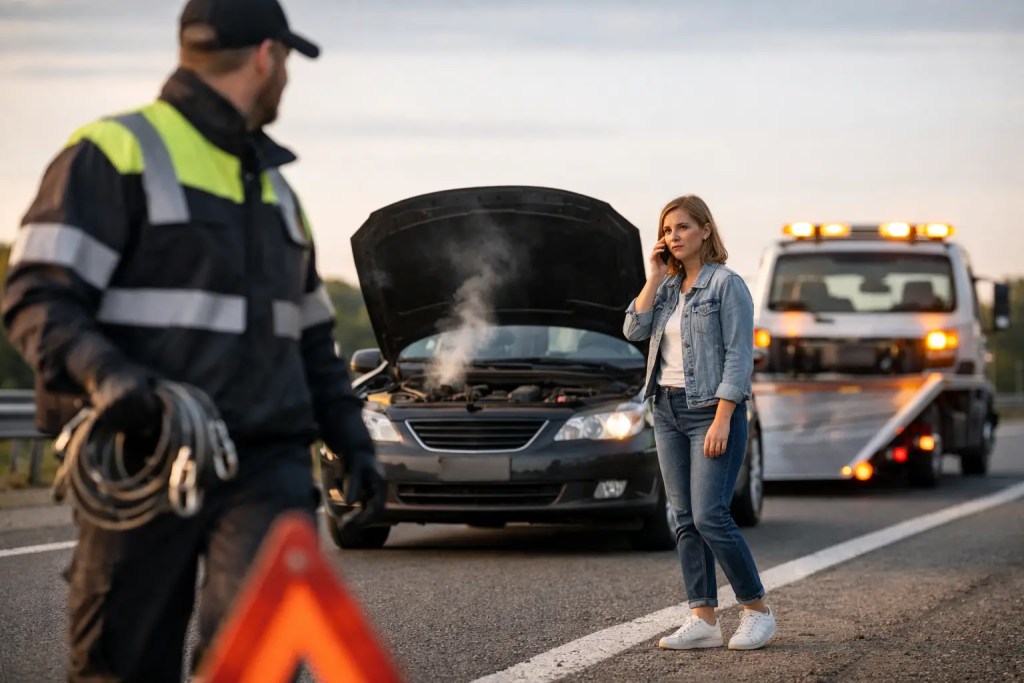
First, get the vehicle to the safest available spot. If you are already parked, stay out of traffic and keep your doors locked if the area feels unsafe. If you broke down on the road, turn on your hazard lights. Move off the travel lane only if the vehicle can be moved without creating more danger.
Have your location ready. A street address, store name, parking-lot section, mile marker, or nearby cross street helps the driver find you faster. Let the dispatcher know the vehicle’s year, make, model, and whether it is in a garage, behind a gate, or in a space with low clearance.
You should also turn off nonessential accessories such as the radio, climate control, chargers, and lights. This will not revive a fully dead battery, but it reduces the load once the vehicle starts. Keep the key or key fob available, and make sure the vehicle is in park or neutral.
Do not keep trying the ignition over and over. Repeated attempts drain the remaining battery charge and can make it harder to diagnose what is happening. One or two attempts are enough to identify the symptoms. Then call for a clear solution.
Should You Try Jumping It Yourself?
You can jump-start many vehicles yourself if you have good cables, another compatible vehicle or a portable jump pack, and you know the correct procedure. But it depends on the situation. A safe jump requires more than clipping red to red and black to black.
Never attempt a jump if the battery case is cracked, leaking, hot to the touch, or visibly swollen. Keep sparks, cigarettes, and open flames away from the battery. If you are unsure where the terminals are, have a hybrid or electric vehicle, or cannot safely position the vehicles, call for roadside assistance instead.
Avoid using an unfamiliar driver’s vehicle as a power source without checking the owner’s manual. Some vehicles have specific jump points and warnings. A portable jump pack is often safer and more controlled, but only when used according to its instructions.
The biggest mistake is rushing. One incorrect connection can damage fuses, electrical components, or the battery itself. Saving a few minutes is not worth turning a dead-battery call into an expensive repair.
After Your Vehicle Starts
Do not assume the problem is over just because the engine is running. Let the vehicle run and drive it long enough to reach a place where the battery and charging system can be tested. A short drive around the block may not replace the power used to start the engine, especially if the battery is weak.
If the battery is older, have it tested soon. If it needed a jump after you left lights on once, it may still be healthy. If it needs another jump the next day, replacement or charging-system repair is likely ahead.
Watch for the battery warning light, weak headlights, slow cranking, or a return of electrical problems. Those are signs to stop relying on jump starts and get the vehicle checked. Waiting can leave you stuck at work, at home, or somewhere much less convenient.
Fast Help for a Dead Battery in Tampa Bay
When your vehicle will not start, you need a clear answer and help that shows up ready to work. Titan Tow & Roadside provides professional roadside support for drivers across Tampa Bay, including jump starts, tire changes, lockouts, towing, and vehicle recovery.
Give the dispatcher your location and vehicle details, then let the right equipment handle the job. If a jump gets you moving, great. If it reveals a bigger problem, you can make the next decision without wasting time or taking chances on the road.
A dead battery is frustrating. It does not have to ruin your day. Get safe, get an accurate assessment, and get moving with the help that fits the problem.
Need help with this today? We serve St. Petersburg, Tampa, Clearwater, Largo, Safety Harbor and Palm Harbor — 24/7.