Best Roadside Battery Jump Options for Tampa Drivers
September 5, 2026
Junk Car Buyer Riverview for Fast Cash and Pickup
September 9, 2026
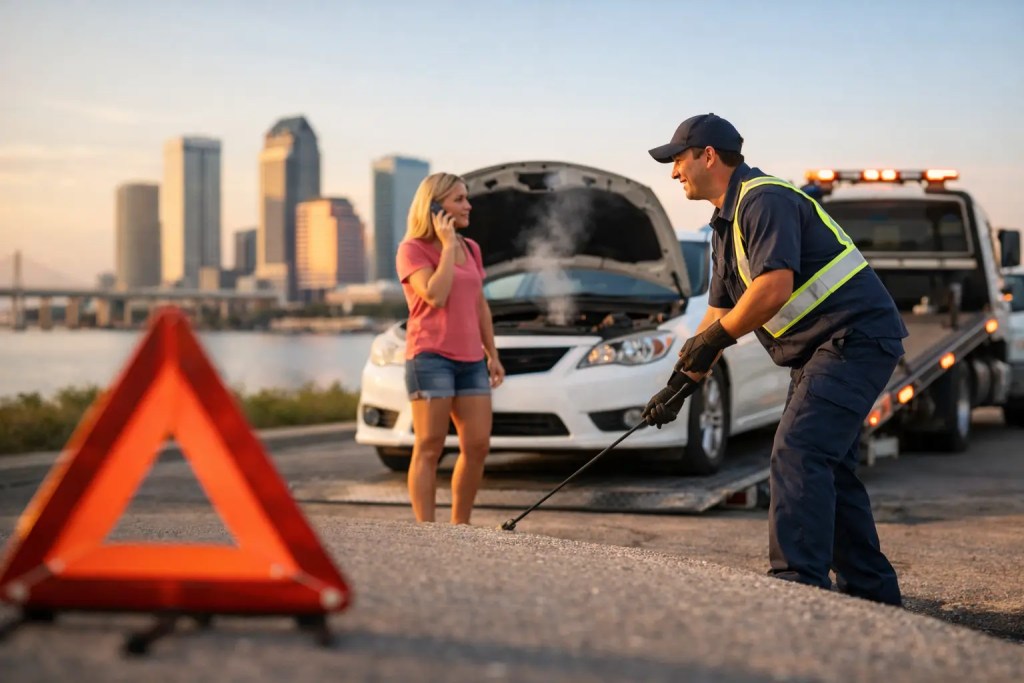
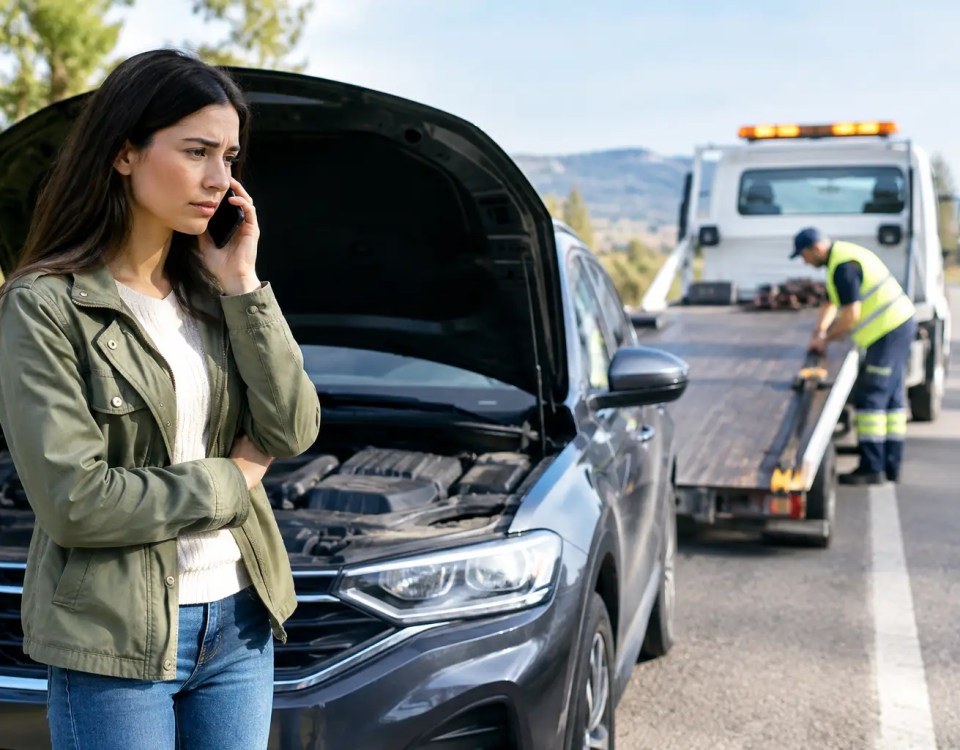
A dead battery in a parking lot is frustrating. A flat tire on I-275 or a stalled car beside a busy Tampa Bay road can feel urgent fast. Knowing how to get roadside help before the situation gets worse helps you protect yourself, explain the problem clearly, and get the right service without wasting time.
The first goal is not fixing the vehicle. It is getting you out of danger. Once you are safe, a local roadside provider can handle the jump start, lockout, tire change, recovery, or tow.
Get Yourself to a Safe Spot First
If the vehicle is still moving, turn on your hazard lights and steer toward the safest available location. A parking lot, wide shoulder, side street, or well-lit service station is better than stopping in an active traffic lane. Do not attempt to push a disabled vehicle through traffic unless law enforcement or another trained professional directs you to do so.
On highways and busy roads, stay aware of passing vehicles. If you can safely exit the car, move well away from traffic and stand behind a guardrail when one is available. If leaving the vehicle would put you in greater danger, remain inside with your seat belt fastened and doors locked.
Call 911 first if there is an injury, fire, fuel leak, crash blocking traffic, or any immediate threat. Roadside assistance is for vehicle problems. Emergency responders handle dangerous scenes.
Florida heat adds another factor. If your vehicle breaks down during high temperatures, do not sit outside in direct sun longer than necessary. Keep water in the car when possible, especially if you travel with children, older adults, or pets.
How to Get Roadside Help Without Delays
Once you are in a safe position, contact a professional roadside assistance provider. Explain what happened, where you are, and whether the vehicle is safely off the road. Clear details help the dispatcher send the correct truck, tools, and technician the first time.
Do not guess at your location if you can avoid it. Use your phone’s map to find the nearest address, intersection, highway exit, mile marker, business name, or landmark. A description like “near the north entrance of the shopping center by the grocery store” is more useful than “somewhere in Clearwater.”
Have these details ready before you call:
- Your exact location, direction of travel, and a nearby landmark or exit
- Your vehicle’s year, make, model, color, and license plate if available
- The problem you are experiencing, such as a flat, no-start, lockout, overheating, or accident damage
- Whether the vehicle is in a safe location, blocked in, underground, in a garage, or stuck off-road
If you need a tow, tell the provider where the vehicle needs to go. That may be your home, a repair shop, a dealership, or another secure location. Confirm the destination before the truck is dispatched so there is no confusion when help arrives.
Ask for the Service You Actually Need
Not every breakdown requires a tow. Calling for the right kind of roadside help can save time and get you moving faster.
Dead Battery or No-Start
A jump start may be enough if the battery is drained and the vehicle otherwise runs normally. However, a car that starts and immediately dies, has repeated battery trouble, shows warning lights, or has a swollen battery may need a tow and repair instead. Do not keep trying to start a vehicle that smells like burning wires or fuel.
Flat Tire
A roadside tire change is usually the quickest option when you have a usable spare, the wheel is not damaged, and the vehicle is on stable ground. If the spare is flat, missing, unsafe, or your tire damage is severe, towing to a tire shop may be the smarter call.
Locked Out of Your Car
Stay calm and avoid forcing a window or using improvised tools. Those shortcuts can damage weather stripping, door locks, airbags, or glass. A trained lockout technician has the proper equipment to open the vehicle with less risk of expensive damage.
Overheating, Mechanical Failure, or Collision Damage
If the temperature gauge is high, steam is coming from under the hood, fluids are leaking, the vehicle is making loud mechanical noises, or it has been damaged in a crash, do not drive it farther than necessary. Pull over, turn it off if safe to do so, and request a tow. A short drive with an overheated engine can turn a manageable repair into major engine damage.
Stuck Vehicle or Vehicle Recovery
Mud, sand, ditches, soft shoulders, and parking barriers can leave a vehicle stuck even when it still runs. Tell the dispatcher exactly where the vehicle is and whether it is in a difficult position. Recovery work may require different equipment than a standard tow.
What to Do While You Wait
After help is on the way, keep your phone charged and volume on. Watch for calls or texts from the dispatcher or driver, since they may need clarification about your location. If it is dark, turn on your interior light only when needed and use a flashlight or phone light to help identify your vehicle from a safe distance.
Avoid accepting help from strangers who offer to tow your vehicle or repair it on the spot. A legitimate provider should be able to identify the company, explain the service being performed, and confirm the destination for your vehicle. You should know who is handling your car before you hand over the keys.
Do not stand next to the vehicle while a technician changes a tire, jump-starts the battery, or loads the car. Give the operator room to work. It is safer for everyone, particularly beside fast-moving traffic.
If you are waiting in a public parking area and feel unsafe, move to a nearby open business, security desk, or well-lit area if you can do so without leaving the vehicle inaccessible. Let the roadside provider know where you are waiting.
Check Your Coverage, but Do Not Wait Too Long
Some drivers have roadside coverage through auto insurance, a vehicle warranty, a credit card benefit, or a membership program. It can be worth checking if you are parked safely and have time. Coverage may reimburse a tow or dispatch assistance directly.
Still, do not let a coverage search delay needed help on an unsafe road. Benefits often have limits on towing distance, service types, locations, wait times, or the number of calls allowed each year. Ask whether there is an out-of-pocket charge, how far a tow is covered, and whether you must use a specific provider.
For drivers who need fast local help, Titan Tow & Roadside LLC provides roadside support and towing for common breakdowns throughout the Tampa Bay area. Straight answers matter when you are stranded. Ask what service is being sent and what happens next.
Know When a Tow Is the Better Decision
Trying to limp a vehicle home can cost more than a tow. Choose towing when the vehicle has unsafe steering or braking, visible fluid leaks, transmission trouble, severe overheating, collision damage, or a warning light flashing on the dash. A flashing check engine light can indicate an engine misfire that may damage the catalytic converter if you continue driving.
A tow is also the practical choice when you are stranded after dark, on a high-speed road, in bad weather, or far from a repair shop. The inconvenience of towing is usually smaller than the risk of a second breakdown or a roadside accident.
Before the truck arrives, remove valuables and gather anything you need from the vehicle, including medication, identification, house keys, work equipment, and child seats if appropriate. If the car will be left at a shop after hours, make sure the shop accepts after-hours drop-offs and knows where the keys will be placed.
Keep a Simple Roadside Plan in Your Car
The best time to prepare is before the warning light comes on. Save a trusted roadside provider’s number in your phone, keep your registration and insurance information accessible, and carry a basic emergency kit. A charged phone cable, flashlight, reflective vest, water, and tire pressure gauge take up little space but can make a stressful wait safer.
When trouble happens, focus on the next right move: get safe, share an accurate location, request the correct service, and let a qualified professional handle the vehicle. Fast help starts with a clear call.
Need help with this today? We serve St. Petersburg, Tampa, Clearwater, Largo, Safety Harbor and Palm Harbor — 24/7.