Car Lockout Steps That Prevent More Trouble
September 3, 2026
How to Get Roadside Help Fast in Tampa Bay
September 7, 2026
A dead battery does not care whether you are headed to work, picking up the kids, or parked outside a Tampa store in summer heat. The best roadside battery jump options depend on where you are, what equipment you have, and whether the battery is simply drained or failing for good. The goal is not just getting the engine running. It is getting you moving safely without damaging your vehicle or getting stranded again five minutes later.
Best Roadside Battery Jump Options: What Works When You Need Help
For most drivers, there are three realistic choices: use jumper cables with another vehicle, use a portable jump starter, or call a roadside professional. Each can work. The right choice comes down to safety, speed, and the condition of your battery.
Jumper Cables and Another Vehicle
Traditional jumper cables are still a practical option when another running vehicle is nearby and both drivers know what they are doing. They are inexpensive, easy to store, and can get a drained battery going quickly. But they are not always the best answer on a busy road, in a dark parking lot, or during heavy rain.
Using cables incorrectly can cause sparks, damage electrical components, or create a risk around a leaking battery. Modern vehicles can also have sensitive electronics, battery locations that are not obvious, or designated jump terminals under the hood. Never assume every car should be connected the same way.
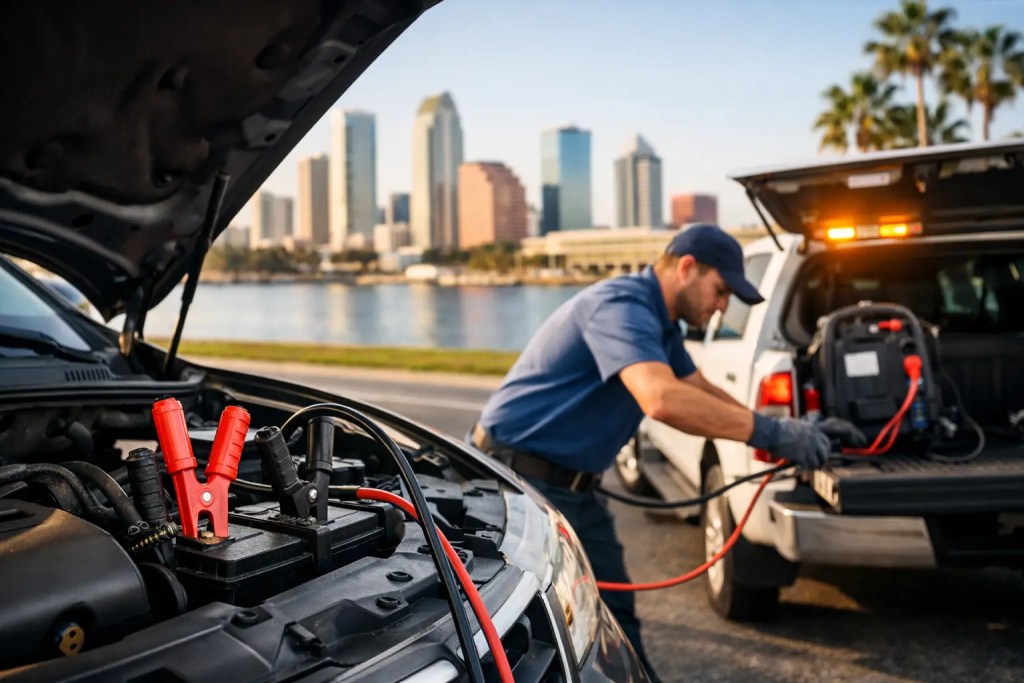
If you use cables, park the vehicles close enough for the cables to reach but do not let them touch. Turn both vehicles off before connecting. Attach the positive cable to the dead battery’s positive terminal first, then the positive terminal on the good battery. Connect the negative cable to the good battery’s negative terminal, then attach the final negative clamp to unpainted metal on the disabled vehicle, away from the battery.
Start the assisting vehicle, wait a few minutes, then try starting the dead vehicle. Once it starts, remove the cables in reverse order. If the vehicle does not start after a few reasonable attempts, stop. Repeated cranking can drain the remaining power, overheat the starter, and hide a bigger problem.
Portable Jump Starters
A portable jump starter gives you independence. These compact battery packs connect directly to your vehicle and do not require another driver or car. For drivers who travel often, commute early, or park in areas where help may not be nearby, this is one of the best roadside battery jump options to keep in the trunk.
Not all jump packs are equal. Choose one rated for your engine size, especially if you drive a truck, SUV, diesel vehicle, or vehicle with a larger engine. Look for clear clamp instructions, reverse-polarity protection, a built-in flashlight, and enough charge capacity to sit in your vehicle for extended periods.
There is a trade-off. A jump pack only helps if it is charged when you need it. Check it every few months, recharge it after use, and do not leave it baking in a hot vehicle for long periods. Florida heat can shorten the life of batteries and electronic gear.
A portable pack is a strong backup for a simple dead battery. It is not a diagnosis tool. If the vehicle starts with the pack but dies again soon after, your battery, alternator, cables, or electrical system may need attention.
Professional Roadside Jump Starts
Calling roadside assistance is the best choice when you are in an unsafe location, unsure how to connect cables, dealing with corrosion, or suspecting a larger issue. It is also the right move when you do not have equipment, cannot find another vehicle, or your car will not start after a jump attempt.
A professional can provide a proper jump start, check for obvious battery issues, and help you decide whether the vehicle can be driven. If it cannot, you can arrange towing instead of taking chances on the shoulder of the road. That matters on busy Tampa Bay roads, where standing beside a disabled vehicle is not worth the risk.
Titan Tow & Roadside LLC provides fast local help for dead batteries, lockouts, flats, and towing needs. No guessing. No waiting for a stranger in a parking lot. Get help from a team equipped to handle the next step if a jump alone does not solve the problem.
When a Jump Start Is Not the Real Fix
A jump gets power back into the system. It does not automatically mean the battery is healthy. Batteries typically weaken over time, and hot weather can speed up that decline. If your battery is more than a few years old, needs frequent jumps, or shows visible swelling, replacement may be the smarter move.
Pay attention to what happens after the vehicle starts. Dim headlights, slow power windows, a battery warning light, or an engine that dies shortly after a jump can point to an alternator or charging-system problem. Loose or corroded battery terminals can create similar symptoms.
Do not assume you can drive around for 20 minutes and fix everything. That may recharge a mildly drained, healthy battery, but it will not repair a bad alternator or restore a battery with a failed cell. If the vehicle starts and you must be somewhere, drive directly to a safe place or service location rather than making extra stops.
Safety Checks Before You Try to Jump a Battery
Take a quick look under the hood before connecting anything. If the battery case is cracked, swollen, leaking, or has a strong rotten-egg smell, do not attempt a jump. Step back and call for assistance. Damaged batteries can be dangerous.
You should also skip the do-it-yourself attempt if you are on a narrow shoulder, near moving traffic, or unable to clearly identify the positive and negative terminals. A fast fix is not worth an injury or costly electrical damage.
Many newer vehicles have battery-management systems, hybrid components, or jump points that differ from older cars. Your owner’s manual is the best source for the correct procedure for your make and model. If you do not have it available, professional roadside assistance removes the uncertainty.
Build a Simple Battery Emergency Plan
The best time to prepare for a dead battery is before it happens. Keep a quality portable jump starter or heavy-duty jumper cables in your vehicle. Add a flashlight, gloves, and a basic phone charger. Check the condition of your battery during regular maintenance, especially before hurricane season, long trips, or periods when the vehicle sits unused.
If you have an older vehicle with recurring electrical problems, keep a roadside assistance number saved in your phone. That one small step can turn a frustrating breakdown into a quick, controlled stop instead of a long wait and a bad decision.
A dead battery can happen without warning, but you do not have to handle it alone. Choose the option that keeps you safest where you are, and treat a repeat battery problem as a reason to get the vehicle checked before the next no-start leaves you stuck again.
Need help with this today? We serve St. Petersburg, Tampa, Clearwater, Largo, Safety Harbor and Palm Harbor — 24/7.