Junk Car Prices 2026: What Is Your Car Worth?
July 23, 2026
What Documents Sell a Junk Car in Florida?
July 27, 2026

That repair estimate can change your whole week. One minute, your car needs a battery or tire. The next, the shop is quoting thousands for an engine, transmission, or major electrical problem. When you need to decide whether to repair or sell car, the right answer is not always the one that keeps it on the road. It is the one that protects your money, time, and safety.
A running car with a reasonable repair may be worth keeping. A high-mileage vehicle with expensive problems, repeated breakdowns, or low resale value may be better turned into cash. No dealerships. No haggling. No throwing more money at a car that is already costing too much.
Start With the Actual Repair Number
Do not make the decision based on a warning light alone. Get a clear diagnosis and a written estimate that separates the immediate repair from anything else the vehicle will need soon. A $700 repair is one thing. A $700 repair plus worn tires, failing brakes, a weak battery, and a leaking radiator is a different situation.
Ask the shop what must be fixed now for the car to be safe and drivable, what can wait, and whether the repair is likely to solve the root problem. This matters most with engines, transmissions, cooling systems, electrical issues, and accident damage. Replacing one part does not help much if the underlying failure is still there.
Also ask whether the estimate includes parts, labor, diagnostics, taxes, and any possible extra charges. A low number that climbs after the work starts is not a real answer. You need a number you can use to make a decision.
Compare the Repair Cost With What the Car Is Worth
Next, look at the vehicle’s value in its current condition, not just the value of a clean, fully repaired version advertised online. Age, mileage, accident history, title status, rust, interior condition, and mechanical problems all affect what someone will pay.
If your car is worth $4,000 in good running condition and needs $2,500 in repairs, spending the money may not make sense. Even after the repair, you may still own an older vehicle with high mileage and other wear items nearing the end of their life.
The math can look different on a newer car with a solid maintenance history. A $1,500 repair on a vehicle worth $15,000 may be a practical move, especially if it is otherwise dependable. The question is not whether any repair feels expensive. The question is whether that repair buys you reliable transportation at a cost you can justify.
Look Beyond This One Breakdown
A single issue does not automatically mean it is time to sell. Cars need maintenance, and even good vehicles occasionally need major work. But patterns matter.
Think about the last 12 months. Have you paid for several repairs? Is the check engine light returning? Have you missed work, appointments, or school pickups because the car would not start? Are you afraid to drive it across Tampa Bay because you do not trust it to make the trip?
Frequent breakdowns create costs beyond the repair bill. You may be paying for towing, rideshares, rental vehicles, missed time, and the stress of wondering whether the next drive will end on the shoulder. When reliability is gone, keeping the car can become the more expensive choice.
When It Makes Sense to Repair Your Car
Repairing is usually the better call when the vehicle has strong value, the issue is isolated, and the rest of the car is in good shape. A newer vehicle with a well-maintained engine, transmission, brakes, tires, and suspension may be worth fixing even if the bill is uncomfortable.
Routine repairs also usually favor keeping the vehicle. Batteries, starters, alternators, tires, brake pads, wheel bearings, and many sensors can fail without meaning the entire car is finished. These are normal ownership costs, not necessarily a sign that you should sell.
It can also make sense to repair if replacing the vehicle would force you into a high monthly payment, a costly loan, or another used car with unknown problems. You know your vehicle’s history. If it has been dependable and the repair gives it a reasonable path forward, fixing it may be the practical choice.
Still, do not let past spending control the next decision. Money already spent on old repairs is gone. It should not be the reason you spend more today on a vehicle that no longer fits your needs.
Repair or Sell Car: Signs Selling Is the Better Move
Selling often makes more sense when the repair cost is close to or higher than the vehicle’s realistic value. It is also a strong option when the car is non-running, has major collision damage, needs an engine or transmission, has severe electrical issues, or has several expensive needs at once.
High-mileage vehicles can reach a point where one repair simply reveals the next one. You repair the cooling system, then the transmission starts slipping. You replace the battery, then discover a charging problem. You fix the suspension, then the engine begins burning oil. There is no exact mileage where every vehicle is done, but repeated major problems are a clear warning sign.
Safety should make the decision easier. Do not keep driving a vehicle with failing brakes, steering trouble, overheating, smoke, fuel leaks, or serious structural damage just because you hope it will hold on another month. A car is not a bargain if it puts you, your passengers, or other drivers at risk.
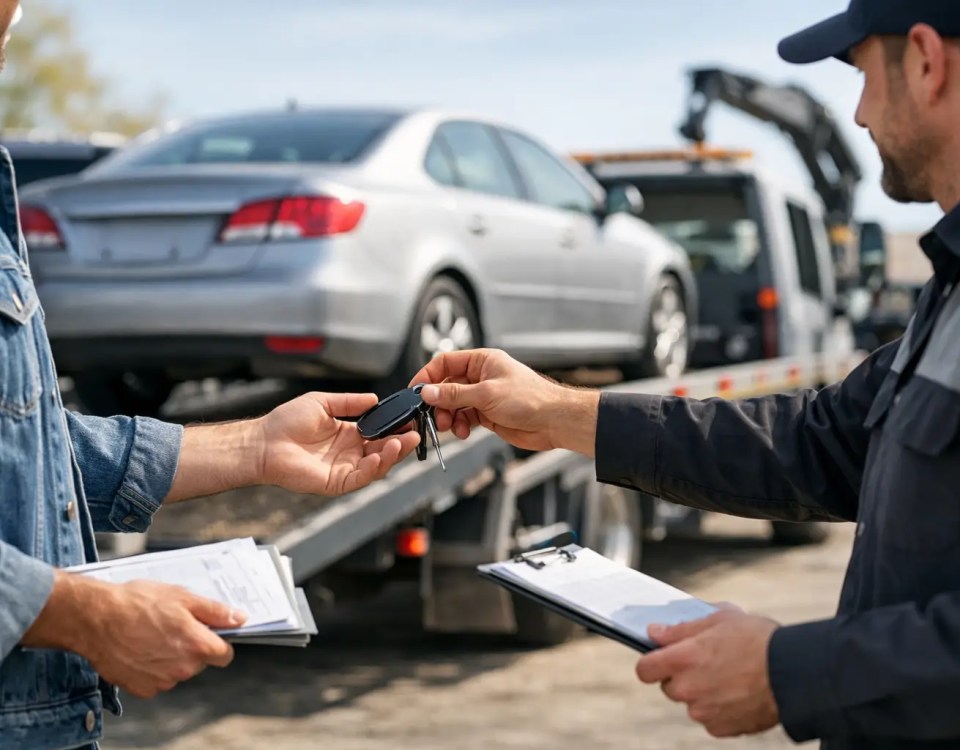
Selling can also be the right move if the car has become a project you do not have time or money to manage. Not everyone wants to find parts, schedule repairs, arrange towing, or negotiate with private buyers. A damaged, unwanted, or non-running vehicle still has value. The key is finding a simple way to convert that value into cash without adding more hassle.
Use the 50 Percent Rule Carefully
A common rule says to sell when a repair costs more than 50 percent of the car’s value. It is a useful starting point, but it is not a hard rule.
For example, a $2,000 repair on a car worth $5,000 is 40 percent of its value. That might sound reasonable, but not if the car also needs tires, brakes, and air-conditioning work. On the other hand, a $2,500 repair on a car worth $4,000 may still be worth considering if it is otherwise unusually clean, reliable, and well maintained.
A better approach is to compare three numbers: the full repair cost, the car’s value after repair, and the cost of replacing it with something dependable. Then add the cost of likely repairs over the next several months. This gives you a more honest picture than using one percentage alone.
Tampa Bay Conditions Can Add Pressure
Florida heat is hard on batteries, cooling systems, tires, and air conditioning. Heavy rain, flooding, and stop-and-go traffic can also expose problems fast. If your vehicle overheats, stalls, loses power, or has electrical trouble during a storm, do not gamble on getting it home.
A tow can prevent a manageable problem from becoming engine damage, an accident, or a roadside emergency. If the vehicle is no longer worth repairing, free pickup for an unwanted car can save you from paying to move something you are ready to sell.
Make the Decision in 15 Minutes
You do not need to become a mechanic to make a solid call. Get the repair estimate. Check the vehicle’s realistic condition and value. Consider what else it needs soon. Then ask one direct question: if you fix this car today, will you feel confident driving it for the next year?
If the answer is yes, and the cost works for your budget, repair may be the right move. If the answer is no, stop feeding money into a vehicle that has become unreliable. Get a fair cash offer, arrange pickup, and move on without the private-sale headaches.
Titan Tow & Roadside LLC helps Tampa Bay owners turn damaged, junk, high-mileage, and non-running vehicles into cash with a straightforward process and free pickup. If you are stuck on the roadside first, get the vehicle somewhere safe before deciding what comes next.
The best choice is not always to repair, and it is not always to sell. Make the call based on the numbers, the vehicle’s condition, and how much reliability you need. Then take the option that gets you out of the problem, not deeper into it.
Need help with this today? We serve St. Petersburg, Tampa, Clearwater, Largo, Safety Harbor and Palm Harbor — 24/7.