Towing Cost Questions? Get Clear Answers Fast
September 11, 2026
Towing Arrival Times: What Affects Your Wait?
September 15, 2026
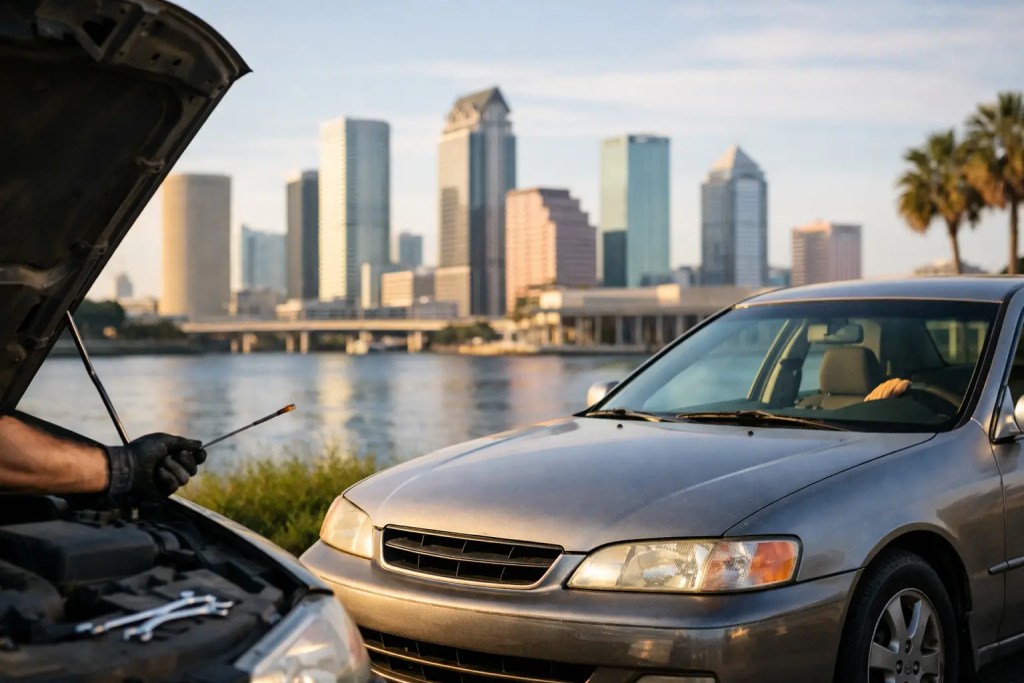
A car with 150,000 or 200,000 miles is not automatically finished. Some keep running for years with basic maintenance. Others become a cycle of warning lights, tow bills, and repairs that cost more than the vehicle is worth. This high mileage vehicle guide helps you make the call without guessing.
The right answer depends on the vehicle’s condition, repair history, safety, and what you need from it. If you depend on your car for work, school runs, or daily travel around Tampa Bay, reliability has real value. A cheap repair is not a good deal if the car leaves you stranded again next week.
High Mileage Vehicle Guide: Start With the Numbers
Mileage matters, but it is only one part of the picture. A well-maintained highway-driven vehicle with 180,000 miles can be in better shape than a neglected vehicle with 90,000. Start by looking at what the car needs now, what it is likely to need soon, and what it could realistically sell for in its current condition.
Pull together recent repair invoices, the title, registration, and any service records you have. Then write down every known issue, not just the loudest one. Include mechanical problems, body damage, tire condition, leaks, warning lights, air conditioning trouble, and whether the vehicle starts consistently.
Next, compare the repair estimate to the vehicle’s current value. There is no single percentage that works for every owner, but a major repair deserves a hard look when it costs close to or more than the car’s value. A $2,500 transmission repair on a vehicle worth $3,000 may not make sense, especially if the engine, suspension, tires, or electrical system also need work.
A smaller repair can be worthwhile when the rest of the vehicle is dependable. Replacing a battery, alternator, starter, brake pads, or a worn tire is different from replacing an engine or transmission. Consider the whole vehicle, not just the repair in front of you.
When Keeping a High-Mileage Car Makes Sense
Keeping the vehicle can be the practical move when it has been maintained, runs reliably, and needs predictable service rather than major repairs. Older vehicles often cost less to insure and do not come with a monthly payment. For a household with a backup car, a high-mileage vehicle may still serve as a useful local commuter.
It also makes sense to keep it when you know its history. You know what has been repaired, how it has been driven, and whether the maintenance has been consistent. Trading a familiar aging vehicle for another used car with unknown problems can simply move the risk somewhere else.
Still, be honest about your needs. If you routinely drive long distances, carry children, work late shifts, or cannot afford to miss work because of a breakdown, reliability should carry more weight than the fact that the vehicle is paid off. A paid-off car can become expensive fast when it needs repeated emergency service.
Signs It Is Time to Stop Putting Money Into It
One repair bill does not always mean it is time to sell. Repeated failures are different. If the car has become unpredictable, the decision is less about mileage and more about risk, safety, and the cost of keeping it on the road.
These are strong signs that it may be time to move on:
- The engine overheats, burns excessive oil, knocks, or has serious internal damage.
- The transmission slips, shudders, will not shift properly, or has failed completely.
- The vehicle has recurring electrical issues that drain the battery or create starting problems.
- Rust, collision damage, or suspension problems affect structural safety or handling.
- Repairs keep stacking up, with multiple major systems near the end of their service life.
- The car has left you stranded more than once, and you no longer trust it for necessary trips.
Safety problems should not be delayed just because the vehicle still drives. Weak brakes, bald tires, steering issues, severe suspension wear, fuel leaks, and overheating can turn a routine drive into a roadside emergency. If the vehicle is unsafe to operate, arrange towing instead of trying to squeeze out one more trip.
Repair, Trade, Sell, or Scrap?
Your best option depends on the condition of the vehicle and how quickly you need a solution. A running car with high mileage may still have private-sale value, but selling it yourself takes time. You may need to clean it, take calls, schedule meetups, negotiate price, and deal with buyers who disappear after asking if it is still available.
Trading it in can be convenient, but dealers may offer less for vehicles with significant mileage, mechanical trouble, or cosmetic damage. This can be a reasonable route if you are already buying another vehicle and the offer fits your budget.
Selling to a vehicle buyer is often the simpler choice for an unwanted high-mileage car, particularly when it has problems. You do not need to spend money making it look perfect before selling. Be direct about its condition, provide accurate details, and ask whether pickup is included. For a non-running vehicle, free pickup can save you the cost and hassle of arranging a tow yourself.
Scrapping may be appropriate when the car has little usable value beyond its weight and parts. But do not assume an old, damaged, or non-running vehicle is only worth scrap. Depending on the make, model, title status, parts, and overall condition, it may still qualify for a cash offer.
Get an Honest Picture Before You Decide
Before authorizing a large repair, get a written estimate that separates urgent safety work from recommended maintenance. Ask the shop what is causing the problem, whether the repair is likely to solve it, and what other major components show signs of failure. A clear answer is more useful than a vague promise that the car should be fine afterward.
If the vehicle still runs, take a short test drive and pay attention to how it starts, shifts, brakes, steers, and idles. If it does not run, do not keep trying to start it if you smell fuel, see smoke, hear harsh grinding, or notice leaking fluids. Those details matter when you decide whether to repair it or sell it as-is.
You should also factor in the next six to twelve months. A vehicle that needs a $600 repair today, tires next month, brakes soon after, and a cooling-system repair before summer is not really a $600 decision. It is a much larger ownership decision.
Selling a High-Mileage Vehicle Without the Runaround
When you are ready to sell, have the basics ready: your vehicle’s year, make, model, mileage, condition, title status, and location. Mention whether it runs and drives, has accident damage, needs repairs, or has been sitting. Accurate information leads to a more realistic offer and fewer surprises at pickup.
Do not spend hundreds of dollars detailing or repairing a high-mileage car just to make it easier to sell unless the work clearly adds more value than it costs. For many unwanted vehicles, selling as-is is the better move. No dealership visits. No haggling with strangers. No waiting around for a buyer who may never show.
Titan Tow & Roadside LLC helps Tampa Bay owners turn unwanted, damaged, non-running, and high-mileage vehicles into cash with a straightforward offer and free pickup. It is a practical option when the car is taking up space, sitting dead in the driveway, or no longer worth another repair bill.
A high-mileage vehicle does not need to become a crisis. Look at the numbers, put safety first, and choose the option that saves you the most time, money, and stress. If the car has reached the point where every drive feels uncertain, it may be time to let it go and move forward.