Best Options for a Dead Car in Tampa Bay
July 16, 2026
Same Day Car Pickup: Fast Cash, No Hassle
July 18, 2026
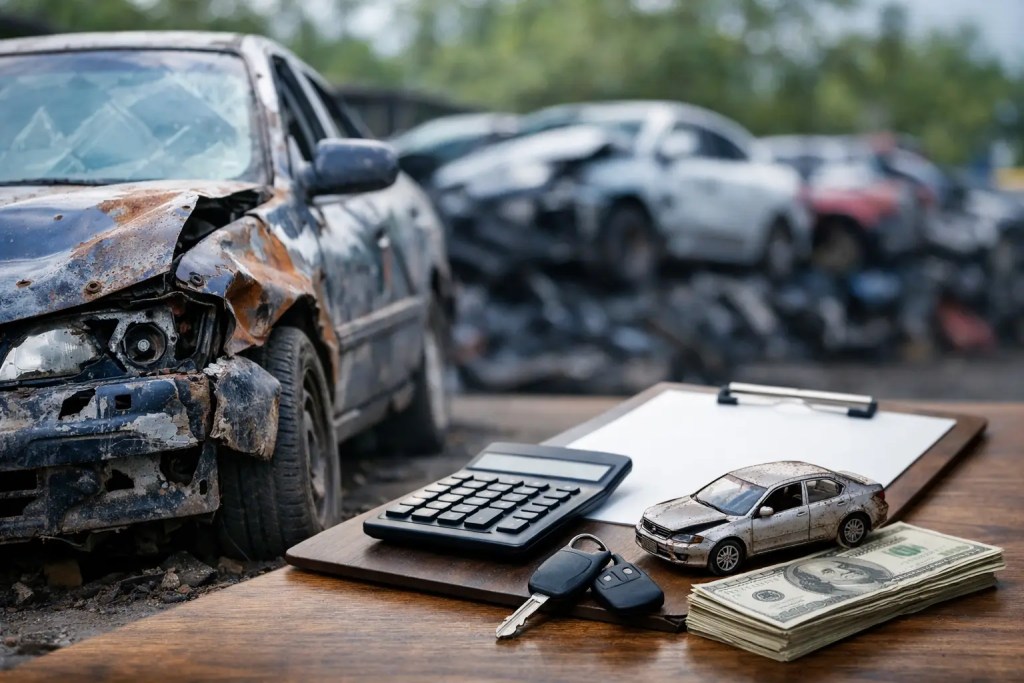
A real example of junk car valuation starts with more than a vehicle’s age or the fact that it will not start. A 2008 sedan with a blown engine may still have a clean title, good transmission, usable wheels, and high-demand body parts. Another car of the same year may be worth less because it has flood damage, missing parts, or no title. That is why a fair cash offer should be based on the actual vehicle in front of you, not a random number pulled from a generic online calculator.
If you have an unwanted, wrecked, high-mileage, or non-running car in the Tampa Bay area, knowing how the value is calculated helps you spot a reasonable offer and move forward without wasting time.
What Goes Into a Junk Car Value?
Junk car valuation is a practical calculation. A buyer looks at what the vehicle can realistically bring back through scrap metal, reusable parts, resale potential, and vehicle recovery costs. The final number depends on the condition, location, and current demand for materials and components.
The first factor is the vehicle itself. Larger vehicles generally contain more metal, but weight alone does not determine the offer. A full-size pickup may have a higher scrap value than a compact car, yet the compact could be worth more if its engine, catalytic converter, electronics, or body panels are in demand.
Next comes the condition. A car that runs and drives, even poorly, may have value as a repairable vehicle. A vehicle with major collision damage can still be valuable for parts. If it has been stripped, burned, flooded, or sitting for years with extensive rust, the offer may lean more heavily on scrap value.
Paperwork matters, too. In most situations, having a valid title makes the sale simpler and can support a better offer. It confirms ownership and gives the buyer a clearer path to process the vehicle. If the title is missing, disclose that early. Do not wait until pickup to mention it.
An Example of Junk Car Valuation Step by Step
Here is a realistic example. Imagine you own a 2011 Ford Fusion with 185,000 miles. The car has been parked for eight months after the engine overheated. It does not run, the battery is dead, and the front bumper has cosmetic damage. However, the body is mostly straight, the tires are usable, the transmission was working before the engine problem, and you have a clear title.
A buyer may start by looking at the basic scrap value. The Fusion weighs roughly 3,300 pounds, but it is not all recoverable metal, and scrap prices move. That baseline might establish a floor rather than the final offer.
Then the buyer considers parts value. The transmission, wheels, doors, mirrors, interior components, catalytic converter, and electronic modules may have resale demand. If those parts are intact and the vehicle is a common model with plenty of repair needs in the market, they can add value beyond the scrap estimate.
The buyer also subtracts the real cost of getting the car. A vehicle that is easy to access in a driveway is different from one with flat tires behind an apartment complex, no keys, or blocked in a backyard. Towing equipment, labor, distance, and loading difficulty affect what can be paid.
In this example, the offer could be meaningfully higher than a bare scrap quote because the vehicle is complete, titled, and likely has usable components. But it would probably be lower than the private-party value of a running Fusion because it needs a major repair and carries risk for the buyer.
That is the point of a fair valuation: it reflects the car as it is, not what it might be worth after someone else pays for repairs, transport, storage, and resale work.
Why Two Offers Can Be Different
You may request quotes from two companies and hear different numbers. That does not automatically mean one company is being dishonest. Vehicle buyers use different outlets, carry different towing costs, and may have different demand for certain makes or parts.
For example, a buyer who has a local need for Honda, Ford, Chevrolet, or Toyota parts may place more value on a complete vehicle from one of those brands. Another buyer may be focused primarily on scrap processing. A car with a bad engine could be especially valuable to the first buyer and close to scrap value for the second.
Location can also change the math. Free pickup is convenient, but it is still a real operating cost. A vehicle in Tampa, St. Petersburg, Clearwater, or nearby communities is typically easier to schedule than a car far outside a service area. Easy access, available keys, inflated tires, and clear ownership documents help keep the transaction simple.
The best approach is straightforward: provide accurate details, get a clear quote, and ask whether towing and pickup are included. An offer that sounds high but later adds a pickup fee is not the same as a guaranteed cash offer with free removal.
Details That Help You Get an Accurate Offer
A quick quote is only useful when it is based on honest information. You do not need to know every mechanical issue, but share what you do know. Give the year, make, model, mileage, condition, title status, and location. Say whether the car starts, whether it has major damage, and whether key parts are missing.
Photos can help when the damage is significant. Clear pictures of the front, rear, sides, interior, and title allow a buyer to see the condition before arriving. This reduces surprises and makes it more likely that the quoted amount matches the amount paid at pickup.
Be direct about common issues. Let the buyer know if the car has a blown engine, transmission trouble, flood exposure, accident damage, or a missing catalytic converter. Those details may lower the offer, but hiding them can delay the sale or lead to an on-site adjustment. No one wants that.
When a Junk Car May Be Worth More Than Scrap
Not every old vehicle should be treated as scrap. A car may be worth more if it runs, has a clean title, has limited damage, or is a model with strong resale demand. Even a non-running vehicle may have value as a repair project if the problem is clearly identified and the rest of the vehicle is in good shape.
On the other hand, a car with a seized engine, severe frame damage, heavy rust, flood damage, or major missing components is often best sold as a junk vehicle. Repairing it may cost far more than the car will be worth afterward. Paying for storage, registration, insurance, or repeated repair attempts can turn an unwanted car into an ongoing expense.
There is no prize for keeping a vehicle that no longer serves you. If the repair estimate does not make sense, selling it for cash and clearing the space is often the practical move.
Avoid These Common Valuation Mistakes
Do not rely on a book value meant for running, road-ready cars. Those values assume a different condition and do not account for towing, salvage processing, or major mechanical failure.
Do not remove valuable parts before asking for a quote unless you know what you are doing. Taking off the catalytic converter, wheels, battery, or electronics may reduce the vehicle’s value more than expected. A complete car is easier to assess and often easier to sell.
Finally, do not accept vague terms. Confirm the cash amount, whether pickup is free, what documents are needed, and whether the offer depends on an in-person inspection. Clear answers protect both sides of the transaction.
A junk car does not need to become a long project. Give an accurate description, have your title and identification ready, and choose a local buyer that gives you a clear number and a simple pickup plan. Titan Tow & Roadside helps Tampa Bay vehicle owners turn unwanted cars into cash without dealership visits, private-sale headaches, or haggling with strangers.
Need help with this today? We serve St. Petersburg, Tampa, Clearwater, Largo, Safety Harbor and Palm Harbor — 24/7.