A Guide to Free Vehicle Pickup
July 6, 2026
Damaged Car Buyer Review: What Matters Most
July 8, 2026
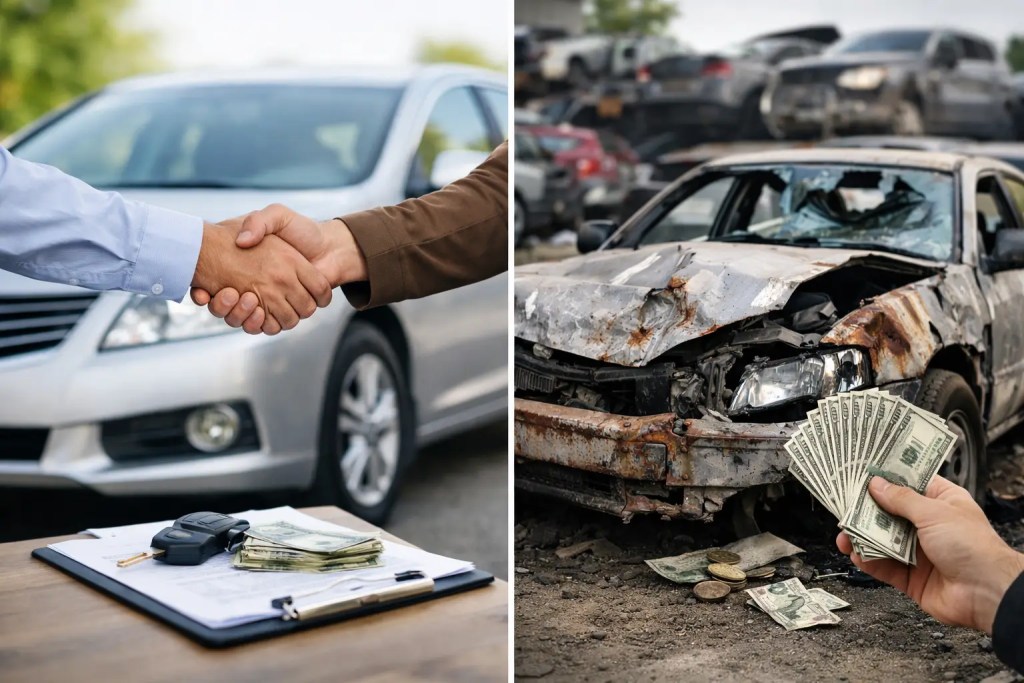
That old car in your driveway is costing you one way or another. Maybe it does not run. Maybe it runs, but barely. Maybe it has body damage, a bad transmission, or 200,000 miles and one more warning light than you can count. When you compare private sale vs junk car options, the real question is not just which one brings in more money. It is which one actually makes sense for the condition of the vehicle, your timeline, and how much hassle you are willing to deal with.
A lot of sellers assume a private buyer will always pay more. Sometimes that is true. Sometimes it is not. If the car needs major work, has title issues, has been sitting, or cannot be driven safely, a private sale can drag on for weeks and still fall apart at the last minute. On the other hand, if the vehicle is clean, running, and in decent shape, junking it too early can leave money on the table.
Private sale vs junk car: start with the car’s real condition
The biggest mistake sellers make is pricing the car based on what it used to be worth, not what it is worth today. A ten-year-old sedan with cold AC and a clean interior is a different vehicle than that same sedan with flood damage, engine knock, and expired tags.
A private sale usually works best when the car still has usable life for the next owner. It should start, drive, stop, and make a decent first impression. Cosmetic flaws are one thing. A cracked bumper, worn seats, or peeling paint might not kill a deal. Serious mechanical problems are different. If a buyer hears transmission slip, sees smoke, or learns the car cannot pass inspection, your buyer pool gets very small very fast.
A junk car sale makes more sense when the vehicle has crossed the line from used car to problem car. That includes non-running vehicles, wrecked cars, high-mileage vehicles with expensive repairs, cars with blown engines, and vehicles that would cost more to fix than they are worth. At that point, you are not selling convenience and transportation. You are selling parts, scrap value, or a rebuildable unit.
When a private sale is worth the extra effort
If your car is still roadworthy, a private sale can bring a better price. Buyers shopping private party are usually looking for transportation at a lower cost than a dealership. If your vehicle can fill that need, you may have room to negotiate and still walk away with more cash than a junk buyer would offer.
But higher price does not mean easy money. Selling privately takes time. You need photos, a clear description, a realistic asking price, and patience. Then come the calls, lowball texts, no-shows, and buyers who want to “think about it” after a test drive. If you still owe money on the car or do not have the title ready, that adds another layer.
Private sale is usually the better fit if your vehicle checks most of these boxes: it runs well, the repairs are minor, the title is clear, and you can afford to wait for the right buyer. If you need cash today or the vehicle cannot be safely driven, that extra effort often stops making sense.
When junking the car is the smarter move
There is a point where speed and certainty matter more than squeezing out every last dollar. That is where the junk option wins.
If the car is non-running, badly damaged, missing parts, or not worth repairing, selling it as junk can save you time and stress. You do not need to clean it up for strangers, explain every issue, or hope a buyer shows up with a trailer. A straightforward cash offer with pickup can be the better deal simply because it closes fast.
This matters even more if the car is sitting in an apartment lot, taking up space at home, or becoming a code issue. In places like Tampa Bay, where weather and storage conditions can make an unused vehicle deteriorate quickly, waiting too long can lower its value even more. A car with some salvage value today can become little more than scrap after another season sitting in the heat and rain.
What affects the payout in a private sale vs junk car decision
Price is not random. Whether you sell privately or as junk, buyers look at the same core factors.
Condition is first. Running cars with clean titles generally bring more in private sales. Non-running cars are usually valued by parts demand, weight, and salvage potential.
Make and model matter too. A damaged truck or popular import may still bring decent money as a junk vehicle because parts are in demand. An older car with little resale value and low parts demand may not.
Title status can change everything. A clear title helps on both sides. Missing paperwork can delay or kill a private sale, and it can also reduce what a junk buyer is willing to pay depending on state rules.
Location and pickup logistics matter more than people think. If the vehicle is hard to access, missing wheels, or stuck after an accident, towing becomes part of the deal. That is where sellers need to stop looking only at the top-line number. A private buyer offering a little more is not really offering more if you still have to pay for towing or wait a week for pickup.
The hidden cost of trying to sell a bad car privately
A lot of owners spend too long chasing a private sale on a car that is clearly past that stage. They post it, answer messages, and keep dropping the price. Then they pay for a battery, maybe a tow, maybe a quick repair just to keep the deal alive. Before long, the car has cost more time and money than expected.
There is also risk. Meeting strangers, handing over keys for test drives, and dealing with payment issues are all part of private selling. Most transactions go fine, but not every seller wants that headache. If the car is already a burden, the fastest clean exit can be worth more than a theoretical higher sale price.
That is why private sale vs junk car is not just a math problem. It is a time problem, a hassle problem, and sometimes a safety problem.
How to decide in 10 minutes
Be honest about four things: whether the car runs, what it needs, how fast you need it gone, and whether you want to deal with buyers.
If the car runs well, has a clean title, and could be reliable transportation for someone else, test the private market first. Price it realistically and give yourself a short window. If there is no serious traction, pivot quickly.
If the car does not run, needs major repairs, has been wrecked, or is not worth putting more money into, get a junk offer. That route is usually faster, simpler, and more predictable. No haggling. No waiting around. No trying to sell a problem to someone who wants a bargain but expects a perfect car.
For many sellers, the right answer is the one that gets the vehicle gone with the least friction. That is especially true when the car is already dead weight in the driveway.
A practical way to look at private sale vs junk car offers
Do not compare offers in a vacuum. Compare net value.
If a private buyer offers $2,500, but you need to spend money on a tow, battery, detail, ad time, and two weekends dealing with people, your real return is lower. If a junk buyer offers less but includes pickup and closes the same day, the gap may be smaller than it looks.
This is where local service matters. A buyer who can handle pickup, paperwork, and fast payment is often a better fit for damaged or unwanted vehicles than trying to piece the transaction together yourself. Companies like Titan Tow & Roadside built their process around that reality because most people selling a junk car are not looking for a project. They are looking for a solution.
The best move is the one that matches the vehicle you have, not the one that sounds best in theory. A solid used car should not be junked too soon. A dead or heavily damaged car should not be dressed up like a private-party gem. Call it what it is, price it accordingly, and choose the path that gets you paid without wasting more time.
Need help with this today? We serve St. Petersburg, Tampa, Clearwater, Largo, Safety Harbor and Palm Harbor — 24/7.