Damaged Car Buyer Review: What Matters Most
July 8, 2026
Guide to Same Day Car Sale That Works
July 10, 2026
That old car sitting in the driveway usually costs more than people think. Registration, insurance, repairs, towing, storage, and the time spent trying to figure out who might buy it all add up fast. If you are searching for the best ways sell old car options without wasting days on calls, no-shows, and lowball offers, the right move depends on one thing first – what shape the vehicle is actually in.
Some cars still have solid resale value. Others are worth more as a quick cash sale to a local buyer who handles pickup. The mistake most sellers make is treating every old vehicle the same. A clean, running sedan with moderate miles should not be sold the same way as a wrecked SUV, a non-running truck, or a junk car with title issues.
Best ways to sell an old car based on condition
The fastest way to avoid headaches is to match the selling method to the vehicle. That sounds simple, but it is where most people lose money or waste time.
If your old car runs well, looks decent, and does not need major work, a private sale may bring the highest price. You can usually ask more because the buyer plans to drive it, not scrap it. The trade-off is time. You need photos, messages, test drives, paperwork, and patience. Private buyers also negotiate hard, and plenty of them never show up.
If the car still runs but has high miles, cosmetic damage, mechanical problems, or limited market appeal, trading it in can be convenient. It is easy, but convenience usually costs you. Dealers rarely pay top dollar for older vehicles, especially if they need repairs or do not fit the dealer’s inventory needs.
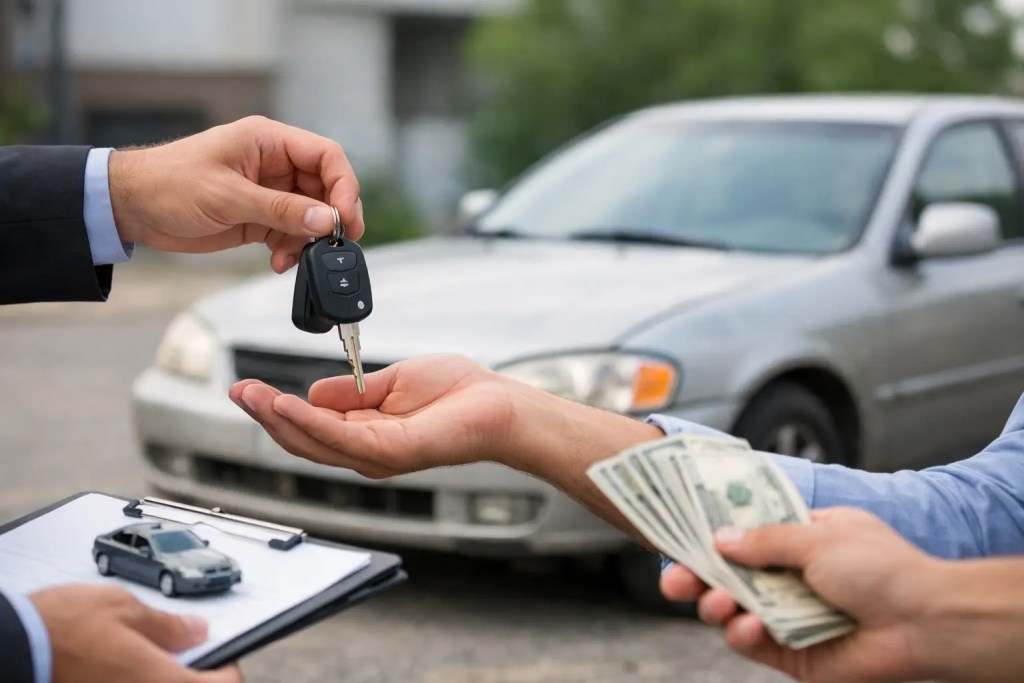
If the car is damaged, junk, non-running, totaled, or simply not worth repairing, selling to a cash car buyer is often the most practical option. No dealership. No haggling. No hassle. You get an offer based on the vehicle’s real condition, and pickup is usually included. That matters when the car cannot be driven safely or legally.
Private sale: highest upside, most work
A private sale can make sense when the car is clean enough to attract everyday drivers. If you have a dependable older Honda, Toyota, Ford, or similar model with a clean title and no major mechanical problems, you may get more money listing it yourself.
But more money on paper does not always mean more money in your pocket. If the car needs a battery, tires, brakes, or registration renewal before a buyer feels comfortable, your margin shrinks. Add the time spent answering messages and meeting strangers, and the process starts to look a lot less attractive.
There is also the risk factor. People show up late. They ask for test drives without serious intent. Some try to renegotiate after agreeing on a price. Others want you to hold the car with no deposit. If your goal is speed and certainty, private sales are rarely the best fit.
When a private sale makes sense
This route works best if your car is drivable, reasonably clean, and worth enough to justify the effort. It also helps if you are not in a rush. If the car is just taking up space and you need it gone quickly, waiting on the right buyer can drag out longer than expected.
Trade-in: simple, but usually lower value
Trading in an old car is easy because it removes one step from your day. You show up, agree to numbers, hand over the keys, and leave. For some sellers, that is enough.
Still, older vehicles often get weak trade-in offers. Dealers want cars they can resell quickly and profitably. If your vehicle has body damage, warning lights, high mileage, or a rough service history, the offer may be far below what you expected. In many cases, the dealer is pricing in auction risk, transport costs, and repairs.
That does not mean a trade-in is a bad option. It just means you should use it for convenience, not because you assume it is the best value. If you are already buying another vehicle and want one-stop simplicity, it can work. If you only want to sell an old car fast, other options may be better.
Cash car buyers: best for damaged, junk, and non-running vehicles
This is where a lot of old car owners save the most time. If the car will not start, has transmission problems, was in an accident, failed inspection, or has become more trouble than it is worth, a direct cash sale is often the right call.
A good local buyer looks at the basics – make, model, year, mileage, condition, title status, and whether the vehicle is complete. Then they make an offer and arrange pickup. You do not need to pay for repairs just to convince a stranger to maybe buy it.
That is especially useful in places like Tampa, where an unused vehicle can become a fast-moving problem. Heat, rain, storage limitations, HOA rules, and towing concerns can all turn an old car into a bigger headache. If the goal is to clear space and get paid, speed matters.
What makes this option practical
The biggest benefit is certainty. You are not waiting for internet leads or wondering whether a buyer will actually show. For damaged or high-mileage vehicles, the price difference between a private sale and a direct buyer is often smaller than people expect, especially once repair costs and towing are factored in.
Titan Tow & Roadside LLC works with the kinds of vehicles many sellers struggle to unload – unwanted, non-running, damaged, and junk cars that are difficult to sell through normal channels. That kind of service makes a difference when your car is not something a dealer or private buyer wants.
How to get more money for an old car without wasting time
Even if your goal is a quick sale, a few smart moves can improve your offer.
Start with accurate information. Have the year, make, model, mileage, VIN, and title status ready. Be honest about damage and whether the car runs. Sellers who try to hide problems usually create delays or get lower offers once the vehicle is inspected.
Next, remove personal items and basic trash. No need to detail the car like it is headed to a showroom, but a cleaner vehicle is easier to assess. If you have maintenance records, keep them handy. They may help with a private buyer or support value on a running vehicle.
You should also know when not to spend money. Putting $1,500 into an old car to maybe increase the selling price by $800 does not make sense. Small cleanup is fine. Major repairs usually are not, unless the car has clear resale value and you are aiming for a private sale.
Mistakes that slow down the sale
One common mistake is overpricing based on emotion. Owners remember what they paid, what they fixed, or how reliable the car used to be. Buyers care about current condition. The market does not pay extra because you liked the vehicle.
Another mistake is choosing the wrong selling path. A junk car is not a private-sale car. A reliable commuter with a clean title is probably not scrap-value only. Matching the vehicle to the right buyer saves time and usually improves the outcome.
Paperwork also trips people up. If you do not have the title, say that upfront. If there is a lien, handle it early. If plates need to be removed or a bill of sale is required, do that properly. Simple paperwork problems can turn a same-day sale into a delay.
So what is the best option?
If your car is clean, running well, and you can wait, try a private sale. If you are replacing the vehicle anyway and want convenience, a trade-in may be enough. If the car is damaged, non-running, high-mileage, or just not worth the effort, a cash car buyer is usually the best move.
The best ways sell old car choices come down to speed, condition, and how much hassle you are willing to deal with. Most people do not need a perfect sale. They need a fair one that gets the vehicle gone and puts cash in hand without dragging on for a week.
An old car does not get more useful by sitting there. Once you know what it is really worth and who is actually willing to buy it, the next step gets a lot easier.
Need help with this today? We serve St. Petersburg, Tampa, Clearwater, Largo, Safety Harbor and Palm Harbor — 24/7.